Beyond the Horizon ISSG
  • Publications
    • Global Challenges
      • Geopolitics & Great Power Politics
      • Energy Security
      • Environment & Climate Change
    • Peace & Conflict
      • Peace & Conflict Management
      • Defence & Security
      • Political & Hybrid Warfare
      • Maritime & Naval Security
      • Fighting Organised Crime and Terrorism
    • Societal Challenges
      • Diversity & Inclusion
      • Gender & Equalities
      • Migration & Integration
      • Democracy & Rule of Law
      • Radicalisation & Polarisation
    • Digitalisation
      • Artificial Intelligence
      • Disruptive Technologies
      • Cyber Security
    • W.A.R. on the Horizon
    • Asia on the Horizon
    • Book Review
    • Horizon Insights
      • Issues
      • Call for Editors
      • Call for Papers
      • Article Submission Guidelines
    • Crisis Horizon
      • Ukraine Crisis Horizon 2023
      • Mediterranean Crisis Horizon
  • Defence & Security
  • Policy Briefs
  • Events
  • Projects
    • EuroHub4Sino
    • EU in a nutshell (EU101)
    • INNOVADE
    • IMMUNE 2 INFODEMIC-2
    • NOTIONES
    • KT4D
  • Academy
    • Horizon Global Academy
    • E-Learning
  • Horizon Lab
  • About
    • About Us
    • Contact Us
    • Career
    • Guideline for Contributors
    • Child Protection Policy
    • SEA-H Policy
    • Partners
    • Team
    • Sponsorship
    • Support and Donation
    • Members Only
    • Gender Equality Plan
    • Terms and Conditions, Cookie, Privacy and GDPR Policies
Select Page
Russian NexGen Missiles a Superiority over Hypersonic Missiles

Russian NexGen Missiles a Superiority over Hypersonic Missiles

by Dr. Aziz Erdogan* | Feb 18, 2020 | Disruptive Technologies, Political & Hybrid Warfare, Research

Abstract This article provides an overview of hypersonic missile technology and where Russia stands in this regard in order to build a reference point to see a global picture. After a description of six “next generation” missiles of Russia, the reader is...
A Network-based Approach for Understanding Suicide Attack Behavior*

A Network-based Approach for Understanding Suicide Attack Behavior*

by Transatlantic Task Force | Jan 23, 2020 | Disruptive Technologies, Research

Terrorists are increasingly using suicide attacks to attack different targets. The government finds it challenging to track these attacks since the terrorists have learned from experience to avoid unsecured communications such as social media. Therefore, we propose a...
The social realities behind the discourse of “Radicalization”

The social realities behind the discourse of “Radicalization”

by Omer Faruk Sazak* | Jan 16, 2020 | Diversity & Inclusion, Geopolitics & Great Power Politics, Research

 Abstract Beyond abstract or conceptual aspects, “counter-radicalisation” in practitioners’ use refers to a contextual action plan with relevant online and offline components deemed necessary to prevent radicalisation. Nearly every country conducts tailored...
The Implications of Gender on International Migration

The Implications of Gender on International Migration

by Dr.Cihan Aydiner* | Jan 13, 2020 | Gender & Equalities, Migration & Integration, Research

Home > Archive for cihanaydiner Abstract The purpose of this research is to provide a critical review of the literature of gender in international migration studies. After presenting and analyzing the role of gender in general concepts/drivers of global migration,...
An Agent Based Approach for Understanding Complex Terrorism Behaviors

An Agent Based Approach for Understanding Complex Terrorism Behaviors

by Transatlantic Task Force | Dec 8, 2019 | Defence & Security, Disruptive Technologies, Research

Understanding the behavior of a terrorist group is a complex phenomenon because of the uncertainty in strategies and tactics used by terrorists. Current literature suggests that terrorism has an evolutionary nature and terrorist groups change behavior according to a...
New framework that uses patterns and relations to understand terrorist behaviours

New framework that uses patterns and relations to understand terrorist behaviours

by Transatlantic Task Force | Dec 6, 2019 | Disruptive Technologies, Research

Terrorism is a complex phenomenon with high uncertainties in user strategy. The uncertain nature of terrorism is a main challenge in the design of counter-terrorism policy. Government agencies (e.g., CIA, FBI, NSA, etc.) cannot always use social media and...
« Older Entries
Next Entries »

Categories

  • Artificial Intelligence
  • Book Review
  • Commentary
  • Cyber Security
  • Defence & Security
  • Democracy & Rule of Law
  • Disruptive Technologies
  • Diversity & Inclusion
  • Energy Security
  • Environment & Climate Change
  • Events & Activities
  • Fighting Organised Crime and Terrorism
  • Gender & Equalities
  • Geopolitics & Great Power Politics
  • Infographic
  • Maritime & Naval Security
  • Migration & Integration
  • Peace & Conflict Management
  • Policy Brief
  • Political & Hybrid Warfare
  • Publications
    • Horizon Insights
    • Proceedings
  • Radicalisation & Polarisation
  • Research

Archives

Beyond the Horizon ISSG logo 20210 3d

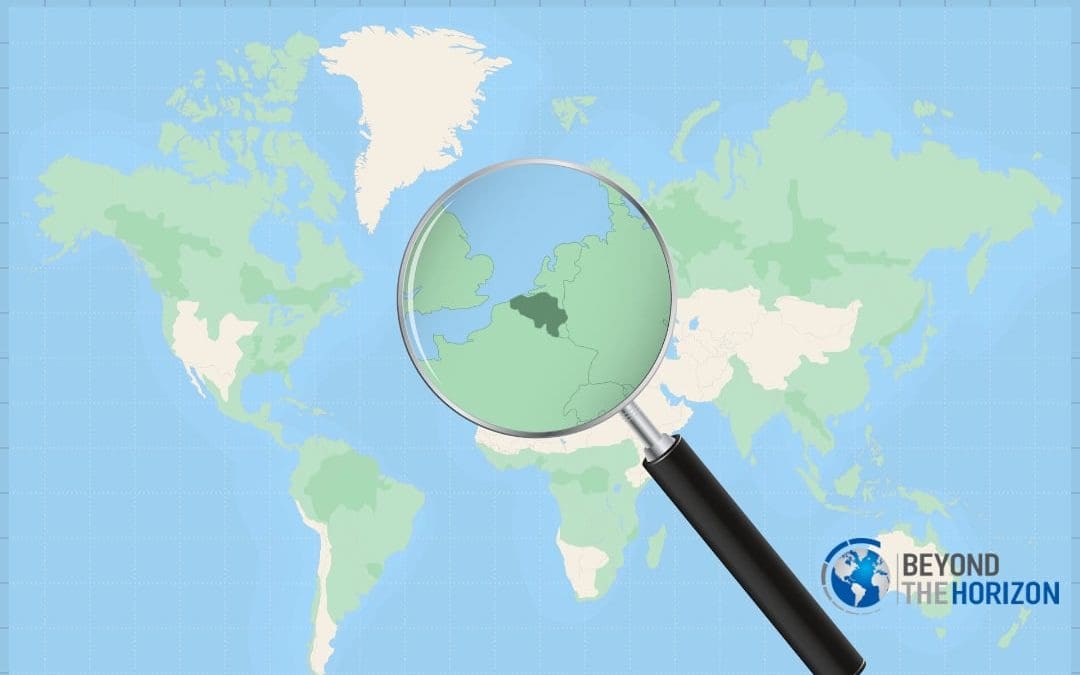
Beyond the Horizon International Strategic Studies Group (BtH) is an independent next-generation think & do tank in Belgium

Subscribe to Newsletter

Navigate

HomePage

Publications

Crisis Horizon

Projects

Academy

Publications

Research

Commentary

Horizon Insights

Policy Brief

Book Review

Guideline for contributors

About

About Us

Support and Donation

Team

Partners

Career

Become a Member

Contact



+32 (0) 2 801 13 57-58



info@behorizon.org



Davincilaan 1, 1930 Zaventem Belgium

BTH BC-Certified-logo_BC-9022
Beyond the Horizon ISSG Quality kwaliteitsregistratie

© Copyright BtH 2017-2026

Privacy Policy • Terms & Conditions • GDPR&Cookie Policy

  • Follow
  • Follow
  • Follow
  • Follow