Key Takeaways
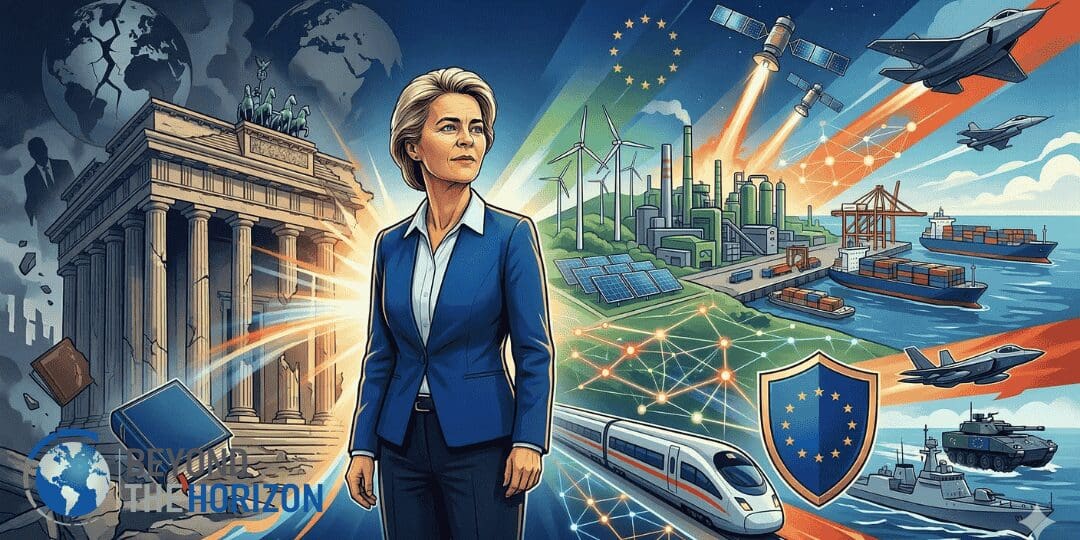
- Recognition of systemic change: Von der Leyen frames the current international environment as a structural transformation rather than a temporary crisis, requiring a reassessment of European foreign policy assumptions.
- Limits of normative power: The speech acknowledges that the EU’s traditional reliance on international law and multilateral institutions is insufficient when confronting actors willing to disregard those rules.
- Strategic independence as a central objective: European “independence” is defined not as isolation but as the capacity to act effectively without excessive reliance on external powers, particularly in security and critical economic sectors.
- Economic policy as geopolitical strategy: Trade agreements, supply chain resilience, and industrial policy are increasingly treated as instruments of strategic influence.
- Infrastructure and connectivity as tools of power: Initiatives such as Global Gateway reflect the EU’s attempt to shape global economic networks and counter competing models of influence.
- Renewed emphasis on defence capabilities: The war in Ukraine has accelerated efforts to strengthen Europe’s military readiness and defence industrial base in order to support credible deterrence.
- Institutional reform as a strategic necessity: The effectiveness of EU foreign policy remains constrained by slow decision-making mechanisms, highlighting the importance of internal reforms.
- An ongoing strategic transition: The EU is moving toward a more realist understanding of international politics, but the process remains incomplete and dependent on future political and institutional developments.
Introduction: Europe Confronts a Structural Transformation of the International Order
In her March 2026 address to the EU Ambassadors Conference, European Commission President Ursula von der Leyen presented what amounts to a strategic diagnosis of the contemporary international system. Her speech does not simply describe a deteriorating geopolitical environment; it frames a fundamental transformation in the operating conditions of European foreign policy. According to von der Leyen, the assumptions that guided Europe’s external strategy for decades—predictable rules, stable alliances, and a functioning system of international law—are no longer reliable foundations for security.
This diagnosis reflects the accumulation of geopolitical shocks that have reshaped the international environment over the past decade. Most prominently, Russia’s invasion of Ukraine fundamentally challenged the credibility of international norms against territorial aggression. The war demonstrated that the deterrent power of international institutions and legal frameworks may be insufficient when confronted with determined revisionist actors. At the same time, growing strategic competition among major powers has further complicated the global landscape, producing what von der Leyen describes as a world increasingly defined by coercion and instability.
Within this context, the European Union faces a strategic choice. It can continue to operate as the custodian of a rules-based international system that is progressively weakening, or it can adapt its external posture to the emerging geopolitical reality. Von der Leyen’s speech suggests that the Union is beginning to pursue the latter path. The address therefore signals not a rejection of multilateralism but a recalibration of European foreign policy: the EU will continue to support international institutions while simultaneously developing the capabilities required to defend its interests in a more competitive global environment.
The Limits of the Rules-Based Order
A central theme of the speech is the recognition that the rules-based international order —long considered the cornerstone of European diplomacy—no longer provides sufficient guarantees of security. Since the end of the Cold War, the EU has positioned itself as one of the primary defenders of international law and multilateral governance. European foreign policy frequently emphasized legal norms, institutional cooperation, and diplomatic engagement as mechanisms for conflict resolution.
However, recent geopolitical developments have exposed the limitations of this approach. The invasion of Ukraine by Vladimir Putin’s Russia represented a direct violation of fundamental principles of international law, including the prohibition of territorial conquest. The inability of international institutions to prevent or decisively deter this aggression demonstrated the fragility of the system upon which European diplomacy had long relied.
This recognition does not lead von der Leyen to advocate abandoning international law. Instead, her argument is more pragmatic: legal norms remain important, but they must be supported by credible economic and military power. Without such backing, rules risk becoming aspirational rather than enforceable.
In this sense, the speech reflects a broader intellectual shift within European strategic thinking. For much of the post-Cold War period, the EU was frequently described as a “normative power,” capable of shaping global behaviour through regulatory influence and diplomatic engagement. Von der Leyen’s address implicitly acknowledges that this model alone is insufficient in an environment characterized by geopolitical competition and coercive statecraft.
European Independence as a Strategic Project
Against this backdrop, the speech introduces the concept of European independence as a central objective of the Union’s long-term strategy. This independence should not be interpreted as isolation or disengagement from global institutions. Rather, it refers to the capacity of the EU to act effectively and protect its interests without excessive reliance on external actors.
For decades, European security was heavily dependent on the transatlantic alliance and the deterrence capabilities of the United States. While this relationship remains fundamental, recent geopolitical uncertainties have prompted renewed debate about Europe’s strategic autonomy. Von der Leyen’s remarks situate this debate within a broader framework of resilience and self-reliance.
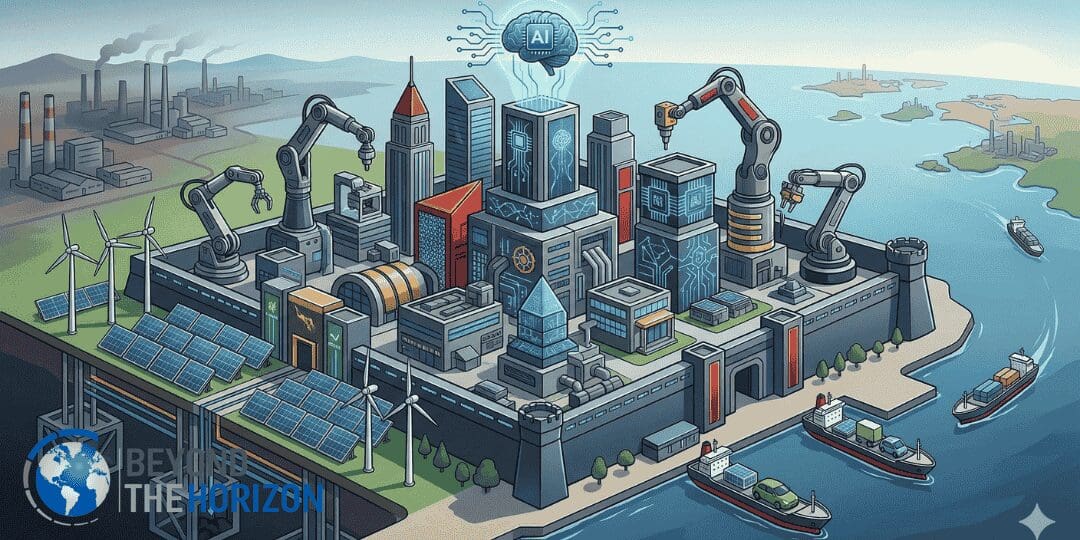
Independence, in this sense, extends far beyond military capabilities. It encompasses economic security, technological competitiveness, supply chain resilience, and diplomatic influence. Modern geopolitical power is multidimensional, and the EU must strengthen each of these dimensions in order to operate effectively in an increasingly competitive world.
Economic reach plays a particularly important role in this strategy. As one of the largest economic blocs in the world, the EU possesses significant leverage through trade, investment, and regulatory standards. Von der Leyen’s speech suggests that these instruments should be more consciously integrated into Europe’s geopolitical strategy.
Economic Power as Geopolitical Leverage
The EU’s global economic presence has long been a source of influence, but it has not always been deployed strategically. In recent years, however, European policymakers have begun to treat economic policy as an essential component of foreign policy.
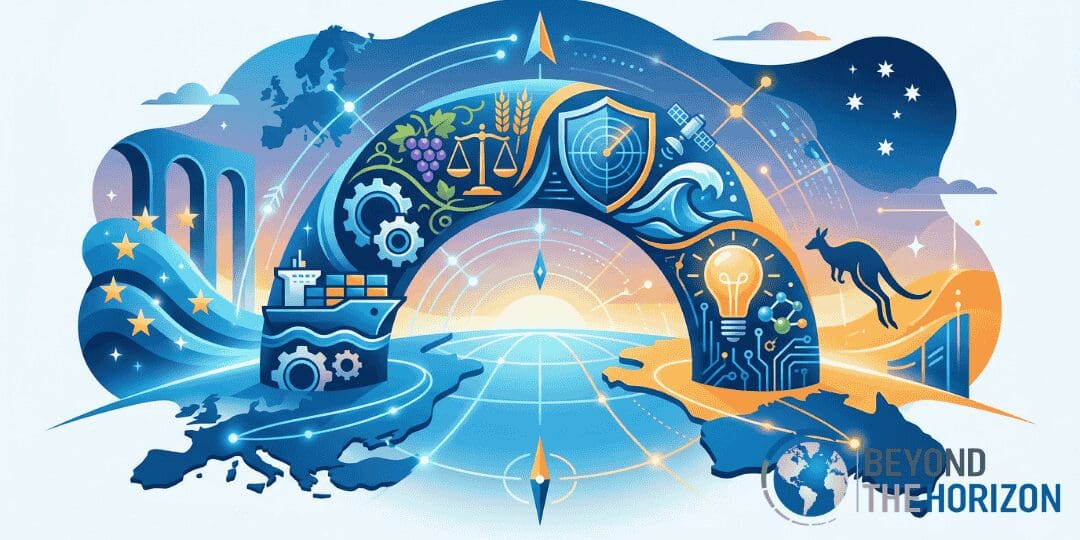
Trade agreements illustrate this approach. The EU has pursued an expanding network of economic partnerships with major regions and emerging economies. Agreements with countries such as India, Mexico, and members of the Mercosur bloc reflect not only commercial considerations but also geopolitical diversification. By broadening its economic relationships, the EU reduces its exposure to strategic dependencies that could be exploited by adversarial actors.
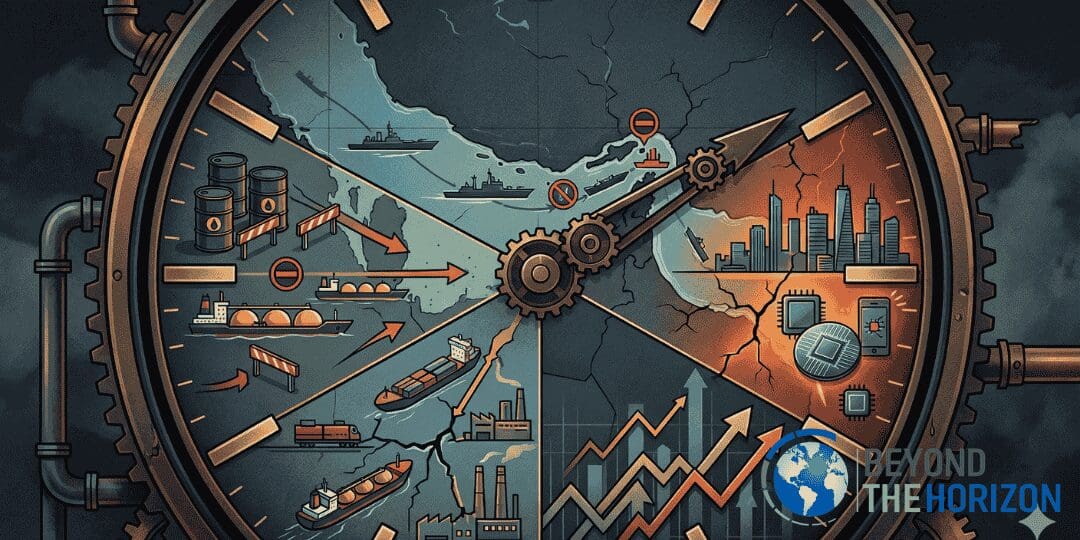
Supply chain resilience has also become a central concern. The disruptions caused by the COVID-19 pandemic and geopolitical tensions revealed the vulnerability of global production networks. Critical sectors such as semiconductors, rare earth materials, and clean technologies have therefore become focal points of European industrial policy.
Von der Leyen’s speech highlights the importance of securing reliable supply chains through cooperation with trusted partners. By strengthening industrial cooperation with countries that share similar regulatory frameworks and strategic interests, the EU aims to create a network of economic relationships that enhances resilience while maintaining openness.
Infrastructure and Connectivity as Strategic Instruments
Another important element of the EU’s evolving geopolitical strategy is infrastructure and connectivity. Through initiatives such as the Global Gateway programme, the EU seeks to invest in large-scale infrastructure projects across multiple regions, including Africa, Central Asia, and the Indo-Pacific.
These projects serve multiple purposes. Economically, they facilitate trade and development by improving transportation, energy, and digital connectivity. Strategically, they allow the EU to strengthen its presence in regions where geopolitical competition is intensifying.
Connectivity initiatives also reflect a broader recognition that infrastructure itself can function as an instrument of influence. Transportation corridors, energy networks, and digital systems shape patterns of economic interaction and political alignment. By participating actively in these projects, the EU can contribute to shaping the architecture of global connectivity in ways that align with its economic and regulatory standards.
Defence and Security: Strengthening European Capabilities
While economic instruments remain central to European influence, von der Leyen’s speech also emphasizes the need to strengthen defence capabilities. The war in Ukraine exposed significant gaps in Europe’s military readiness and defence industrial capacity. Addressing these weaknesses has therefore become a priority for the EU and its member states.
European initiatives aimed at increasing defence investment seek to improve interoperability among national armed forces, strengthen the European defence industry, and accelerate the development of advanced military technologies. These efforts are not intended to replace existing security structures but to complement them by enhancing Europe’s capacity to contribute meaningfully to collective defence.
The strategic logic is straightforward: credible deterrence requires credible capabilities. If the EU intends to protect its territory and uphold its commitments, it must possess the military resources necessary to support those objectives.
Institutional Constraints and the Challenge of Decision-Making
Despite these ambitions, von der Leyen acknowledges that the EU’s internal decision-making structures can limit its effectiveness as a geopolitical actor. Many aspects of foreign policy still require unanimous agreement among member states, a requirement that can significantly slow the Union’s response to rapidly evolving crises.
In a geopolitical environment characterized by speed and uncertainty, delays in decision-making can undermine credibility. Adversaries may exploit divisions among member states, while partners may question the reliability of the EU as a strategic actor.
This institutional challenge has led to renewed discussions about potential reforms that would allow more flexible decision-making mechanisms, particularly in areas related to foreign policy and security. Although such reforms remain politically sensitive, von der Leyen’s remarks suggest that improving the efficiency of EU decision-making will be essential if the Union is to operate effectively in the emerging international environment.
Conclusion: A Gradual Transformation of European Foreign Policy
Von der Leyen’s 2026 address suggests that European foreign policy is undergoing a gradual but significant conceptual shift. For much of the post–Cold War period, the European Union approached international politics primarily through the language of rules, institutions, and economic interdependence. While these principles remain central to the EU’s identity, the geopolitical developments of the past decade have exposed the limits of relying on them as the sole foundations of security.
The speech therefore reflects an emerging form of European strategic realism. Rather than abandoning its commitment to international law and multilateral cooperation, the EU is beginning to acknowledge that these norms require material backing to remain effective. Economic strength, technological capacity, military capabilities, and institutional agility are increasingly viewed as necessary complements to normative influence.
At the same time, the transformation described by von der Leyen remains incomplete. The EU continues to face structural constraints, including fragmented decision-making processes and differing strategic priorities among member states. Whether Europe can successfully translate its economic and regulatory power into coherent geopolitical influence will depend on its ability to address these internal limitations while sustaining political consensus for deeper integration in security and foreign policy.
In this sense, the speech should be understood less as a declaration of a fully formed grand strategy than as an indication of an ongoing transition. The European Union is beginning to adapt to a more competitive international system, but the success of this adjustment will depend on whether its institutional structures and political will evolve at the same pace as the geopolitical environment surrounding it.