Key Takeaways
- The closure of the Strait of Hormuz has transformed a regional war into a global energy and economic crisis by disrupting roughly one-fifth of global oil and LNG flows.
- The most significant strategic consequence is not only the blockade itself, but the visible breakdown of consensus within the U.S.-led security architecture.
- European and NATO partners are refusing or limiting participation because they see intervention as politically costly, legally dubious, and disconnected from their direct national mandates.
- Asian allies are highly vulnerable to the energy shock but remain militarily cautious due to domestic legal constraints, parliamentary resistance, and reluctance to join a U.S.-driven escalation.
- Iran’s asymmetric strategy has proven resilient: mines, drones, and pressure on regional infrastructure have offset the expected advantages of U.S. and Israeli conventional superiority.
- The conflict undermines assumptions that alliance dependence on U.S. security guarantees automatically produces operational support in crisis conditions.
- The longer the impasse continues, the more it strengthens a fragmented and transactional international order in which economic interdependence no longer guarantees strategic unity.
Introduction: A Triad of Conflict, Cargo, and Coalition
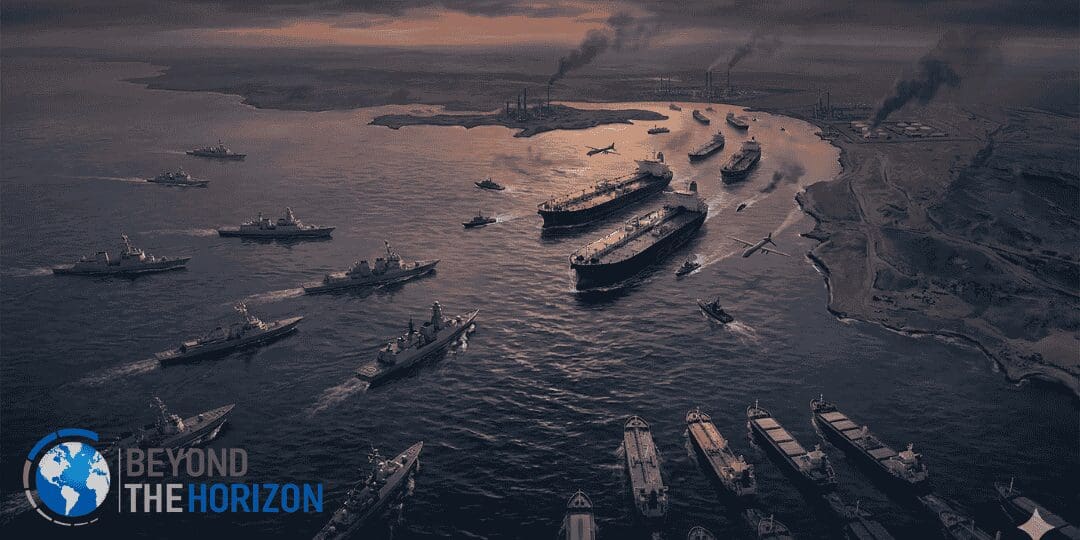
As of March 2026, the U.S.-Israeli conflict with Iran has entered its third week, resulting in an estimated 2,000 fatalities and a systemic shock to the international order. At the epicenter of this crisis is the Strait of Hormuz, a maritime chokepoint whose closure represents an existential threat to global industrial continuity. Iran’s successful deployment of asymmetric denial strategies has effectively severed the world’s primary energy artery, transforming a regional kinetic engagement into a global economic emergency.
The central strategic crisis, however, is not merely the blockade itself, but the widening security architecture deficit between Washington and its traditional partners. While the Trump administration demands a robust multi-national maritime coalition to reopen the waterway, its allies across Europe, NATO, and the Asia-Pacific are exhibiting a profound divergence of national interest from collective defense. This piece analyzes the resulting geopolitical fragmentation as traditional security guarantees are superseded by domestic mandates and strategic hesitation.
The Chokepoint Crisis: Quantifying the Economic Fallout
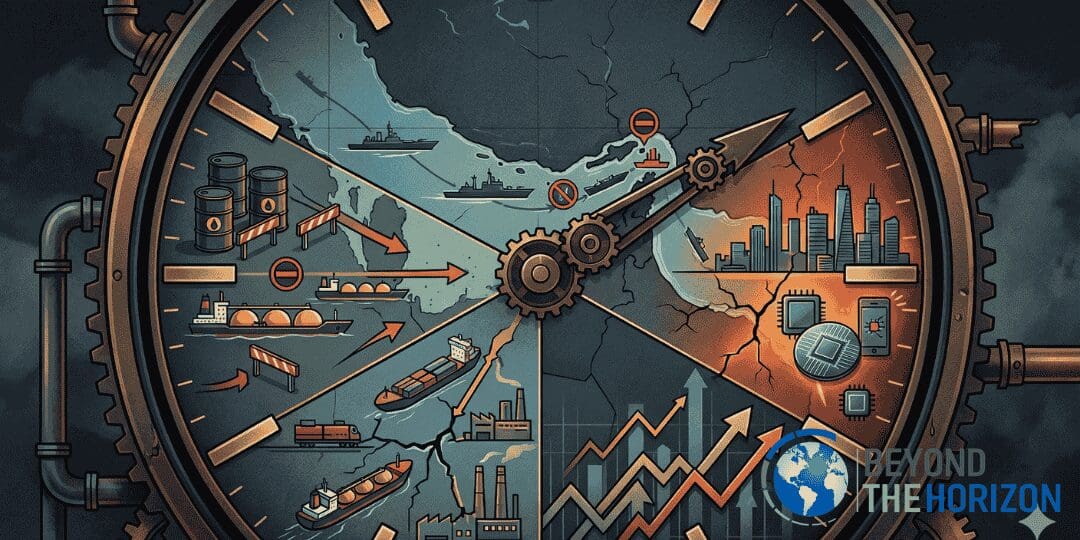
The Strait of Hormuz serves as the “jugular vein” of the global economy. Its current closure constitutes the largest disruption to global oil supplies in history. Macroeconomic indicators confirm a systemic shock that transcends regional boundaries, as the global market lacks the immediate elasticity to bypass this physical blockade.
The impact of the closure is characterized by the following data points:
- Volume of Trade: Approximately 20% of global oil and liquefied natural gas (LNG) supplies are currently stranded. The suspension of these flows has paralyzed global energy supply chains.
- Price Volatility: Crude oil prices have surged past $100 per barrel. Policymakers are now confronting “stagflation”—the debilitating intersection of stagnant economic growth and accelerating inflation.
- Monetary Response: The inflationary pressure has triggered immediate fiscal tightening; notably, the Reserve Bank of Australia implemented a rate hike specifically to mitigate the domestic price surges catalyzed by the Gulf instability.
Tehran utilizes the blockade as a primary deterrent against continued bombardment, while Washington attempts to leverage the escalating economic cost to compel ally participation in a military coalition.
The “Appetite” Gap: European and NATO Reluctance
Significant strategic friction has emerged within the EU and NATO, signaling a potential collapse of the trans-Atlantic security consensus. Despite President Trump’s warning that NATO faces a “very bad future” without collective action, European capitals are prioritizing de-escalation over intervention.
Ally Perspectives on Maritime Intervention
| Country/Entity | Stated Position/Action | Strategic Rationale |
| European Union (Kallas) | No appetite to extend “Aspides” mandate to the Strait. | Fear of being “actively involved in this war”; critical deficit of naval assets. |
| Germany (Merz/Pistorius) | Explicit refusal of military participation; skepticism of Aspides’ efficacy. | Chancellor Merz noted a lack of U.S./Israeli consultation; “Not our war”; absence of UN/NATO mandate. |
| United Kingdom (Starmer) | Developing a “credible plan” but explicitly ruling out a NATO mission. | Desire to secure the Strait without being drawn into the “wider Iran war.” |
| Romania (Toiu) | Refusal to participate in Aspides expansion. | Strategic requirement to prioritize naval capabilities within the Black Sea theater. |
The “So What?” factor centers on the breakdown of the U.S. security umbrella. President Trump’s frustration with “ingratitude”—specifically targeting the UK for only offering assistance after Iranian capabilities were supposedly degraded—highlights a transactional shift in alliances. Chancellor Merz’s revelation that Germany was not consulted prior to the commencement of hostilities further validates the “appetite gap,” rendering the U.S. demand for a unified front practically unattainable.
The Limits of Collective Security in Asia and the Pacific
While Asian energy consumers are the primary beneficiaries of the Strait, they remain militarily cautious, constrained by legal hurdles and a reluctance to adopt Washington’s escalatory posture.
- Japan: Prime Minister Sanae Takaichi maintains a “no decision” stance on escort ships. Despite scheduled Washington consultations, Tokyo is restricted by its “independent” assessment within a rigid domestic legal framework.
- South Korea: The presidential office faces significant internal opposition, as overseas troop deployments require parliamentary approval that is currently withheld by the legislature.
- Australia: Despite acknowledging the Strait’s criticality, Minister Catherine King explicitly stated Australia will not send naval vessels, signaling a refusal to contribute to the kinetic reopening of the passage.
- Denmark: In a rare nuance, Foreign Minister Lars Løkke Rasmussen suggested that as a “large maritime nation,” Denmark must “face the world as it is,” though this has not yet translated into a commitment of force.
- China: Washington is attempting to link the Paris trade talks (between Secretary Scott Bessent and Vice Premier He Lifeng) to maritime security. Trump has threatened to delay the Beijing summit to pressure China into policing the Strait, from which it draws 90% of its oil.
This lack of a unified front emboldens Iranian asymmetric tactics, as the absence of a cohesive naval response confirms Tehran’s calculation that the international community is too fragmented to sustain a prolonged maritime intervention.
Iranian Asymmetric Persistence and Regional Escalation
A critical strategic irony has defined the first three weeks of the conflict: the failure of rapid-dominance theory. Despite intensive U.S. and Israeli bombardment intended to decimate conventional assets, Iran continues to project power through “cheap drones” and naval mines. This low-cost “havoc” has proven resilient against superior conventional air power.
The warnings of “regional contagion” have been validated by strikes on U.S. partner infrastructure:
- UAE Infrastructure: Drone and missile strikes have hit Fujairah and Abu Dhabi, including the Shah gas field and Zayed port. These attacks resulted in the death of a Pakistani national in the Bani Yas area, escalating the conflict’s human cost for neutral third-party states.
- U.S. Embassy, Baghdad: An intense assault involving rockets and five drones underscores the vulnerability of U.S. assets throughout the Middle East.
Iranian leadership remains defiant; Parliament Speaker Ghalibaf asserts that Iranian “offensive power and accuracy” have increased despite the bombardment. In response, President Trump has threatened to strike Kharg Island—Iran’s primary oil hub—stating, “We can hit that in five minutes… And there’s not a thing they can do about it.” This escalatory rhetoric suggests the conflict is moving toward total infrastructure destruction.
Conclusion: The Prospect of a Fragmented Security Architecture
The Hormuz crisis is not simply a test of maritime security; it is a test of whether the postwar alliance system still functions under conditions of shared risk but uneven political will. The blockade has exposed a brutal fact: the global economy remains structurally dependent on a narrow energy corridor, while the states most capable of reopening it are increasingly unwilling to absorb the military and political costs of doing so. What has emerged is not a unified coalition response, but a fragmented strategic landscape in which allies calculate exposure through domestic constraints, legal limits, and immediate national priorities rather than alliance solidarity.
That fragmentation is the real strategic story. Washington’s expectation that economic shock would automatically translate into coalition discipline has not been borne out. European governments resist being pulled into a war they did not authorize; Asian partners, though heavily exposed to Gulf energy flows, remain constrained by constitutional, parliamentary, and political barriers; and even those states rhetorically acknowledging the Strait’s importance stop short of committing force. The result is a widening gap between the scale of the crisis and the willingness of U.S. partners to treat it as a collective security obligation.
Iran has exploited that gap effectively. Its use of mines, drones, and dispersed regional pressure demonstrates that lower-cost asymmetric tools can sustain strategic leverage even under heavy bombardment. This is the most damaging implication of the impasse: superior conventional power has not produced rapid coercive success, while the costs of disruption continue to radiate through energy markets, inflation, and diplomatic relations. If this pattern holds, the closure of Hormuz will be remembered not only as an energy shock, but as a defining episode in the erosion of alliance cohesion and the transition toward a more transactional, fractured security order.