
Key Takeaways
- SAFE is a structural shift, not a crisis tool: The programme normalises defence spending within EU macroeconomic governance, marking a decisive break from treating military expenditure as exceptional or temporary.
- Financial integration is outpacing strategic integration: The EU is mutualising debt for defence faster than it is aligning capability priorities, risking scale without coherence.
- Solidarity is now threat-weighted: Allocation is deliberately uneven, favouring frontline and under-invested states. This is strategically sound but politically harder to sustain over time.
- Loans create future political risk: Favourable terms soften the impact, but repayment obligations mean SAFE’s durability depends on a long-term consensus that defence should outrank competing budgetary demands.
- Oversight and legitimacy are weak points: Emergency legal bases and limited parliamentary control leave a growing gap between fiscal militarisation and democratic scrutiny.
- Absorption capacity may entrench inequalities: States with mature procurement systems and defence industries are best positioned to benefit, potentially reinforcing existing disparities.
- SAFE locks in path dependency: Once defence financing is embedded in EU borrowing practices, reversing course becomes politically and institutionally difficult, quietly committing Europe to permanent war finance.
Introduction: From Emergency Tool to Structural Instrument
In January 2026, the European Commission approved the first wave of defence funding under the new SAFE programme, endorsing national defence investment plans for eight EU member states. This move unlocked roughly €38 billion in low-cost loans – about one-quarter of the €150 billion SAFE envelope – for countries ranging from Romania to Portugal. More significant than the headline numbers is the signal it sends: defence spending is being quietly embedded into the EU’s long-term financial framework, rather than treated as a one-off emergency response to Russia’s war in Ukraine. What began as a crisis-driven initiative is evolving into a structural instrument of European policy. While some early analyses saw SAFE as a temporary stopgap for an extraordinary situation, its implementation marks a turning point from declaratory ambition to institutional commitment. Europe is normalising the practice of jointly financing security – a shift as political as it is financial.
SAFE – short for Security Action for Europe – is not just another crisis patch or ad-hoc fund. It was adopted in May 2025 as part of a broader “Readiness 2030” defence package, and it borrows elements of the EU’s post-pandemic recovery model for a new purpose. Much like NextGenerationEU used joint European borrowing to fund economic recovery, SAFE uses the EU’s AAA credit rating to raise up to €150 billion on capital markets and re-lend it to member states for military purposes. In practice, the Commission issues EU-backed bonds and offers long-term loans (up to 45 years, with a decade-long grace period) to national governments at the EU’s low borrowing cost. For most countries without a AAA rating, this means major savings and affordable financing for defence investments that would otherwise strain their budgets. The political significance is profound: Brussels is mutualising financial risk for war preparedness while national capitals retain control over how the money is spent. This begins to rewire how Europe prepares for conflict – moving defence from a fiscally marginal, nationally siloed concern toward a more routine element of European economic governance.
Why SAFE Is Different: Defence as a Macroeconomic Constant
Unlike earlier EU defence initiatives – often modest, fragmented or project-based – SAFE operates at member-state balance-sheet scale. Previous tools such as the short-term EDIRPA common procurement fund or the ammunition production program (ASAP) were measured in the hundreds of millions, not billions, of euros. By contrast, SAFE makes available up to €150 billion in loans, an order of magnitude beyond past efforts. Nineteen member states quickly lined up to request funding, collectively oversubscribing the envelope with around €190 billion in loan applications. Even EU heavyweights showed interest: Poland alone tentatively sought about €43.7 billion – nearly a third of the total – followed by large asks from countries like Romania, France and Hungary. This robust demand underscores that SAFE is filling a real gap in European defence planning. It treats military readiness as a macroeconomic priority, to be financed predictably and at scale, rather than a series of small, ad-hoc projects.
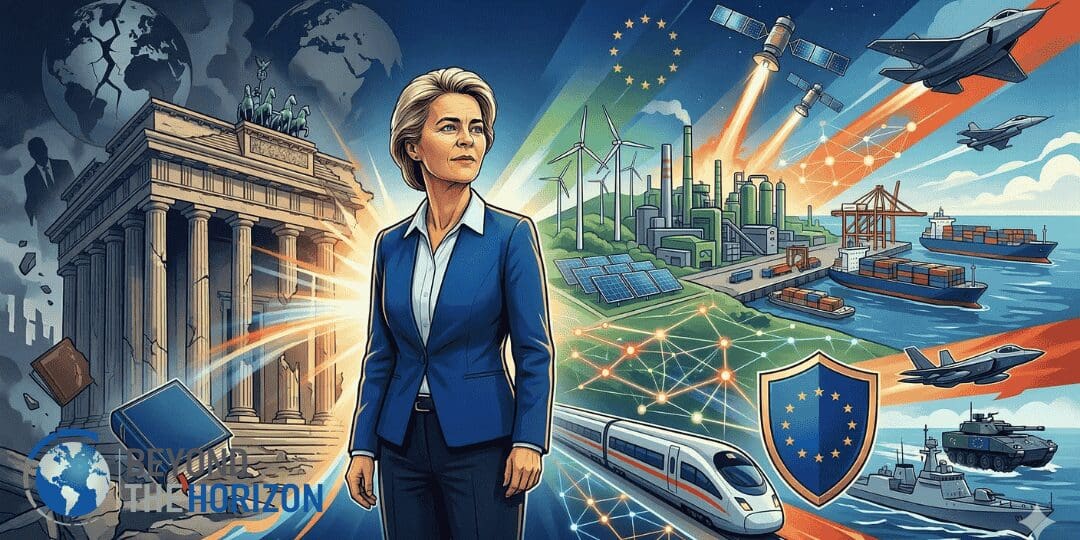
Crucially, the method of financing reflects a recognition that Europe faces a protracted deterioration in its security environment. The war in Ukraine and mounting doubts about long-term U.S. security commitments have shattered the illusion that European rearmament can be a short-lived effort. SAFE’s design borrows the template of the EU’s pandemic-era Recovery Fund and applies it to defence: joint borrowing, large-scale investments, and multi-year planning. In the words of Commission President Ursula von der Leyen, “the EU has made more progress in defence [in 2022–2025] than in decades before,” enabling member states to mobilise up to €800 billion for defence this decade, including €150 billion earmarked for joint procurement via SAFE. The clear implication is that defence spending is no longer a temporary spike but a permanent fixture in European budgets. Historically, the EU treated defence as the sole responsibility of national governments – even subjecting military outlays to deficit limits just like any other spending. Now, by partially Europeanising the financing of defence, Brussels is acknowledging that security is a shared long-term challenge requiring collective fiscal effort. SAFE does not create a “European army,” but it does serve as a financial enabler of deeper defence integration: the EU is pooling its financial firepower to ensure countries can afford the capabilities they need, even as decisions on those capabilities remain sovereign.
The Politics of Allocation: Threat Exposure, Not Equality
The first wave of SAFE loans also reveals how the EU is prioritising among different defence needs. Notably, the distribution is uneven – a feature, not a bug. Romania’s share dwarfs all others: about €16.68 billion (nearly 44% of the first batch) is tentatively allocated to Romania’s plan. This reflects Romania’s frontline position on NATO’s eastern flank, its proximity to Ukraine and the Black Sea, and its urgent need to modernise a large, Soviet-legacy military. In contrast, Denmark requested only about €46 million – the lowest of all applicants, presumably because as a small high-income country it faces fewer immediate shortfalls. Other first-wave recipients fall in between: Belgium is set to receive roughly €8.3 billion, Spain and Cyprus around €1 billion each, with smaller sums for Bulgaria, Croatia and Portugal. This is not solidarity as equal treatment, but rather solidarity as prioritisation by exposure and need. Countries bearing the brunt of geopolitical risk or chronic under-investment are getting proportionally larger assistance. As one example, Cyprus – earmarked €1.18 billion – may appear modest next to Romania’s haul, but for a country of Cyprus’s size it is substantial. It signals that the EU considers the significance of the Eastern Mediterranean as part of the wider security equation. Vulnerability is defined broadly, not only by direct proximity to Russia’s war.
This targeted allocation approach was foreshadowed by the Commission’s provisional loan ceilings announced in September 2025. Those indicative amounts, now confirmed in the first loan approvals, make clear that SAFE’s support is not being split per capita or per GDP; it is directed where it can have the biggest strategic impact.
Limits and Risks: Loans, Not Grants
For all its promise, SAFE comes with important constraints and uncertainties. First, these €150 billion in funds are loans, not free grants. They must be paid back by the member states over the coming decades. The loans are offered on very favourable terms – essentially at the EU’s ultra-low borrowing rate, with no profit margin – but they will still add to national debt loads. This raises the question of political appetite in the long run. Enthusiasm is high now, in the wake of Russia’s aggression, to borrow for defence; however, when repayments start coming due (after the 10-year grace period) or if interest rates shift upward for future tranches, governments and voters might reassess. The buy-in today does not guarantee enthusiasm tomorrow if economic priorities change. A future government might balk at servicing debt incurred by its predecessors for military projects, especially if the security situation improves. SAFE’s durability will depend on continued political consensus that investing in defence is worth the financial trade-offs. The European Parliament has already flagged concerns about oversight of this massive spending – it launched a legal challenge arguing that the Commission pushed SAFE through under an emergency legal clause (Article 122 TFEU) that bypassed the Parliament’s normal budgetary role. While this doesn’t oppose the program’s goals, it highlights worries that democratic scrutiny is lagging behind this rapid militarization of EU finances. Over time, stronger oversight mechanisms may be needed to maintain legitimacy, especially once the immediate sense of crisis fades.
There is also the issue of uneven absorption capacity. Not all European countries are equally prepared to effectively use a sudden influx of defence financing. Those with mature procurement agencies and ready-to-go projects (for example, countries like France or Italy, or smaller states like Finland or the Netherlands which did not feature in the first wave but have advanced planning) can swiftly sign contracts and start drawing loans. Others may struggle with bureaucratic or industrial bottlenecks. The first wave itself showed disparities: Belgium was able to plan for an €8 billion modernization push, whereas Denmark’s token €46 million request suggests limited immediate needs or reluctance to scale up quickly. Such differences mean some countries might reap the benefits sooner, while others might delay or even leave money on the table. Without careful coordination, SAFE could even entrench disparities – if, for instance, countries with larger defense industries end up capturing most of the contracts, smaller states might see fewer economic benefits from their participation. Analysts have cautioned that a program like SAFE, if not managed inclusively, could lead to “unequal outcomes among Member States” and reinforce structural gaps. The Commission will need to monitor implementation so that even less-developed defense industries can participate in joint projects (possibly through subcontracting or co-production), lest the promise of EU-wide solidarity turn into an uneven boon.
Finally, SAFE does not by itself solve the strategic coordination problem with NATO. The European Commission has been careful to frame SAFE and related EU defence efforts as complementary to NATO, not as duplicative. In theory, EU-funded capabilities will also meet NATO requirements – for example, investments in air defence or logistics will fill known NATO capability gaps. NATO officials and EU planners are working to avoid overlap, coordinating procurement planning where possible. However, the existence of parallel funding streams (NATO’s own programs, national budgets, and now EU loans) always carries a risk of fragmentation. If member states do not harmonize their shopping lists, Europe could still end up with duplication or omissions – for instance, too many of one type of tank and not enough anti-missile systems, or incompatible communications gear, etc. Financial integration is not a substitute for strategic integration. It remains imperative that European governments align their capability priorities in venues like NATO’s defence planning process or the EU’s Coordinated Annual Review on Defence. Otherwise, SAFE could finance a lot of activity but still fall short of producing a coherent European defence posture. In sum, the success of this new war-finance approach will require continued political coordination and trust – among EU institutions, member states, and transatlantic allies.
Conclusion: A Quiet but Consequential Shift
The launch of SAFE’s first loans may not have the drama of an EU treaty change or the visibility of NATO deployments, but it represents a quiet revolution in how Europe finances its security. By leveraging the EU’s financial clout to support national military build-ups, Brussels is laying down fiscal scaffolding for a more integrated European defence over the long term. This is not a flashy leap toward a “European Army,” but rather a pragmatic step that materially strengthens the foundations for collective defence. As one Commission Vice-President put it, Europe has “no time for incremental steps” and must move “from the stage of opportunities to the stage of delivery” in building its defence readiness. SAFE’s implementation is exactly that shift – from talking about strategic autonomy to starting to bankroll it.
The implications are durable. Once defence investment is normalized within EU budgets and planning, it becomes politically and financially harder to reverse. Indeed, the very oversubscription of the initial SAFE program has prompted discussion of extending it further, suggesting that joint war financing could become a permanent fixture of EU policy. Europe is no longer asking whether it should collectively pay for security; it is now debating how, where, and at what scale to do so. The SAFE programme’s first operational steps indicate an answer: at large scale, targeted to those who need it most, and through mechanisms designed to endure. In the coming years, we can expect this quiet normalization of war finance to bind member states’ defence efforts ever more tightly together – a fiscal glue underpinning the military glue of NATO and EU cooperation. It has happened with little fanfare, but it is a consequential shift: Europeans are financing European security in a way few would have imagined just a few years ago. As long as Russia’s threats persist and uncertainties linger in Washington, this new European war-finance architecture is likely here to stay, gradually reshaping the continent’s approach to defence and its own strategic autonomy.