
Key Takeaways
- The $1 trillion surplus signals structural weakness, not strength. It reflects suppressed domestic demand, excess capacity, and policy distortions rather than superior competitiveness or healthy growth.
- China’s export boom is driven by one-sided adjustment. Exports are absorbing output that China’s own economy cannot, or will not, absorb—an outcome of weak consumption, a property slump, and deliberate import substitution.
- Trade diversion has replaced trade rebalancing. U.S. tariffs did not reduce China’s global surplus; they merely rerouted Chinese goods to Europe, emerging markets, and third countries, intensifying competitive pressures worldwide.
- Macroeconomic policy, not tariffs, underpins the imbalance. A managed currency, high savings, state subsidies, and industrial policy matter more than border measures in explaining the surplus’s persistence and growth.
- The surplus is accelerating geopolitical backlash. The U.S., EU, and major emerging economies increasingly treat Chinese trade flows as strategic risks, prompting tariffs, subsidies, export controls, and supply-chain realignment.
- Europe is shifting from engagement to guarded containment. Despite deep economic interdependence, political tolerance for Chinese overcapacity and subsidized exports is eroding rapidly.
- The Global South is not a pressure valve. Many emerging economies face rising deficits and deindustrialization risks from Chinese competition, undermining Beijing’s “win-win” narrative.
- China’s policy choices are narrowing its external options. Absent serious domestic rebalancing—higher consumption, currency appreciation, and reduced industrial excess—China will face steadily rising trade barriers and fragmentation.
- The global system is entering chronic tension, not crisis. Trade volumes will remain large, but globalization is becoming conditional, politicized, and segmented along geopolitical lines.
- Without reform, the surplus will define China’s next phase negatively. It risks becoming a lasting symbol of imbalance and mistrust rather than economic maturity, with costs borne both abroad and at home.
Introduction: A Milestone with Consequences
China’s annual goods trade surplus has crossed the unprecedented $1 trillion threshold – a figure never before recorded in economic history. For the first 11 months of 2025, Chinese exports surged to about $3.4 trillion while imports stagnated near $2.3 trillion, yielding this landmark surplus. Such scale is more than a statistical milestone; it is a stress test for the global economic order. Beijing touts the export boom as a sign of resilience amid domestic headwinds, yet many foreign partners see a growing imbalance that is anything but benign. Indeed, as a share of world GDP, China’s surplus is now among the largest in recent history – roughly on par with the extraordinary U.S. trade surpluses during World War II. This outsized gap between what China sells to the world and what it buys back is raising alarms internationally. Trade partners warn that the situation is “not sustainable” and are bracing for economic distortions and political frictions as adjustment costs are effectively shifted outward onto other economies. In short, China’s $1 trillion surplus may be historic, but its legacy could be increased tension and instability unless the underlying imbalances are addressed rather than defended.
The Mechanics: Export Power vs. Import Weakness
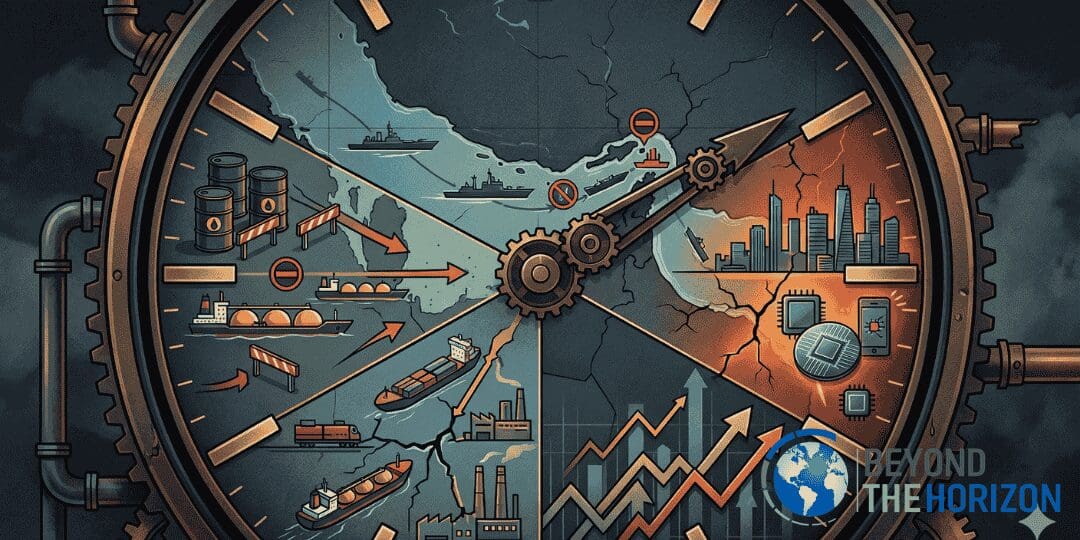
China’s swollen surplus reflects two reinforcing dynamics: soaring exports and sagging imports. On the export side, Chinese manufacturers have displayed remarkable adaptability in the face of trade barriers and softening global demand. When confronted with steep U.S. tariffs (averaging nearly 40–47% on Chinese goods, China did not falter – it rerouted and diversified its trade. Shipments to the United States plunged by around 28–29% year-on-year as intended, but exporters more than made up the difference by pivoting to other markets. Sales to Europe, Southeast Asia, Latin America, Africa, and Australia have all surged by double digits. In November alone, exports to the European Union jumped 14.8% annually while those to Southeast Asia rose over 8%, even as U.S.-bound exports shrank. Chinese firms also found creative ways to dodge tariffs – from relocating some production to tariff-free countries to transhipping goods through third-party nations. For example, U.S. imports from Indonesia spiked by one-third as Chinese goods were redirected via that route. Backed by state support, preferential credit, and a competitively managed currency, China’s export machine has thus barrelled ahead despite trade wars and cooling global growth. The renminbi’s value has been kept artificially weak, which boosts the price competitiveness of Chinese products abroad while making imports costly at home. This managed exchange rate – alongside subsidies and industrial policies – has insulated Chinese exporters and allowed them to continue gaining global market share. As one Beijing-based economist put it, China’s export gains are not because world trade is expanding overall, but because “China is claiming a larger share of the existing trade landscape”.
On the import side, China’s domestic demand remains weak, leading to sluggish imports. Structural and cyclical forces have combined to suppress Chinese appetite for foreign goods. Notably, a prolonged housing and property downturn since 2021 has dragged down domestic investment and consumer spending, which in turn curbed imports of everything from construction materials to consumer products. Chinese factories kept churning out steel, cement, and appliances even as developers halted new projects and households tightened belts, resulting in excess output that had to find buyers abroad. Meanwhile, decades of industrial policy aimed at self-reliance – exemplified by the “Made in China 2025” strategy – have reduced China’s reliance on certain foreign inputs, further muting import growth. In recent years, Chinese imports have essentially flatlined, reflecting both weak consumption and deliberate import substitution. The contrast is stark: before the pandemic, exports and imports rose in tandem, but since then exports have shot well above trend while imports stagnated. The result is a one-sided adjustment driven by internal constraints – export strength without internal rebalancing. Rather than a balanced trade expansion based on efficient specialization, China’s surplus today arises from domestic weakness and policy choices that channel surplus production outward. Exports are elevated not only because of global demand but because domestic demand is too anaemic to absorb what China produces. This imbalance is evidenced by customs data: in November 2025, China’s exports leapt nearly 6% year-on-year while imports grew barely 1.9%, undershooting forecasts. In short, China’s trade profile is being shaped by what one analyst calls “one-sided adjustment” – robust export growth enabled by an inhibited home market, rather than mutual gains from trade.
Geopolitical Fallout: When Trade Becomes Strategy
The political consequences of China’s structural trade imbalance are already playing out across the globe. What was once hailed as deepening economic interdependence is now increasingly viewed through a national security lens – with trade surpluses and dependencies seen as strategic vulnerabilities. In the United States, the persistence of a huge bilateral gap (China ships about three times as much to the U.S. as it buys back) has hardened attitudes across the political spectrum. President Trump’s trade war – launched originally to force changes in China’s model – has morphed into a longer-term U.S. policy of tariffs and tech restrictions that enjoy rare bipartisan support. As of late 2025, U.S. tariffs on Chinese goods still average around 47.5%, the highest since the 1930s. These tariffs, along with export controls on technology, are explicitly aimed at countering what Washington sees as unfair trade and an overweening Chinese industrial state. While the U.S.-China trade conflict has seen temporary truces (for instance, tariff rollbacks and promises of Chinese purchases of U.S. soybeans), it is clear that fundamental issues remain unresolved. American officials note that tariff salvos alone have not fixed core global imbalances – issues like currency misalignment and China’s excess savings-investment gap. Indeed, despite years of tariffs, China’s surplus only grew, leading U.S. economists to emphasize that trade balances ultimately reflect macroeconomic policies (high Chinese savings vs. high U.S. consumption) rather than just trade policies. This realization is pushing the geopolitical debate beyond tariffs toward broader decoupling in sensitive sectors (e.g. semiconductors, EV batteries, rare earths). In essence, the U.S. now treats China’s trade and industrial might as a strategic threat, to be countered with not just duties but export bans, investment screening, and alliance-building with alternative suppliers.
Meanwhile, the European Union has been jolted by China’s surplus in a more immediate way, as Chinese goods diverted from the U.S. have flooded into Europe. EU imports from China have climbed sharply (for example, Chinese exports to Europe were up ~15% year-on-year in a recent tally), triggering alarms about damage to European industries. Policymakers in Brussels – traditionally champions of free trade – are now weighing defensive measures they never would have considered a decade ago. The EU has already imposed new anti-subsidy tariffs on Chinese electric vehicles, adding import duties ranging from 17% to over 30% on top of the standard 10% tariff. This came after Europe’s auto makers warned that a wave of cheap Chinese EVs could devastate EU car sales. Still, these measures have only narrowed, not erased China’s price advantage– Chinese EVs continue to gain European market share, albeit a bit more slowly. Facing pressure from industry and unions, European leaders are sending stern messages to Beijing. French President Emmanuel Macron, fresh off a state visit to China, warned that Europe “could follow the US” in imposing broad tariffs if China does not address the imbalance. Germany, whose economy relies heavily on autos and machinery, is deeply worried: even officials historically friendly to China now talk of “overcapacities” and dumped imports “distorting global prices”. Yet Europe is in a bind. As a Reuters commentary noted, the EU has “little interest and few effective tools” to fight a full-blown second China shock. Europe remains heavily dependent on China both as a market for its exports and as a supplier of everything from electronics to critical materials. Thus, the EU hesitates to escalate too far, fearing Chinese retaliation or higher costs to its own consumers (for instance, Europe needs China’s affordable solar panels to meet green energy goals). Still, the political pressure is mounting in Europe to respond to voters’ and manufacturers’ concerns. Brussels has formed a special task force to monitor Chinese trade diversion and is devising new instruments to screen investments and safeguard supply chains. In sum, China’s surplus is catalysing a shift in Europe’s stance – from engagement to cautious containment.
For many emerging economies, China’s surplus presents a double-edged sword. On one hand, some developing countries benefit as alternative production hubs or via Chinese demand for commodities. On the other hand, many now find themselves competitors with China in third markets or running deficits with China. Nations that once saw booming exports to China (supplying its industrial rise) are now watching China undercut their own exports elsewhere. ASEAN countries, for example, enjoy Chinese investment but also face a flood of Chinese goods in their region. India’s trade deficit with China hit a record $99 billion in 2025 as Chinese exports to India kept climbing– fuelling calls in New Delhi for protection of key sectors. As HSBC’s chief Asia economist observed, U.S. tariffs on China have simply diverted Chinese exports to “other destinations, exacerbating competitive pressures in many parts of the world”. Whether in Latin America, Africa, or Southeast Asia, local industries (from textile mills to tech assembly plants) struggle to compete with China’s scale and cost. This is straining China’s relations with the Global South too, complicating Beijing’s narrative of “win-win” cooperation. The surplus has thus become a catalyst for a more fragmented global trading system. Instead of integration, we are seeing the formation of blocs and defensive alliances. The United States and Europe are gradually aligning on a tougher approach to Chinese trade practices, even if their tactics differ. Major economies are bolstering supply-chain resilience – seeking to source critical products from trusted partners rather than rely too heavily on China. For its part, Beijing is doubling down on alternative markets (the “Global South”) and trade deals that bypass the West, to hedge against decoupling. Global forums are feeling the strain: China’s Premier Li Qiang recently implored the IMF, World Bank, and WTO to oppose protectionism, even as he faces broadening tensions with those very trade partners over China’s export dependence. International economic cooperation, once taken for granted, is now conditional and fraught. Trade – the flow of goods once thought to tie nations together – is increasingly seen as a strategic battleground.
Conclusion: A Surplus That Narrows Options
Far from being a sign of unalloyed economic strength, China’s $1 trillion trade surplus is better understood as evidence of an unfinished economic transition. It highlights how China’s growth model has yet to achieve the rebalancing that economists have long called for. An economy of China’s size was expected to eventually shift toward domestic consumption-driven growth, importing more and naturally reducing its trade imbalances. Instead, the persistence and now record expansion of the surplus reveal that this shift remains elusive. Without a credible move toward consumption-led growth and greater import absorption, China’s external surplus is likely to remain excessively large – and continue provoking reactions abroad. Each month of eye-popping surplus data tightens the political vise on China’s trading partners, narrowing their willingness to tolerate the status quo. Indeed, the surplus is already constraining Beijing’s diplomatic and economic options. Countries that once eagerly engaged with China are now more guarded, tying cooperation to changes in Chinese policy. As one European lawmaker remarked, “everyone is knocking at China’s door” with the same message – boost domestic demand, or face more barriers. Beijing’s room to manoeuvre is shrinking: it can either undertake internal reforms (stimulating consumption, letting the yuan appreciate, curbing industrial excess) or face a steady accretion of external restrictions on its exports.
For the global economy, China’s structural surplus does not foreshadow an immediate crisis so much as a period of chronic tension. Global growth in the coming years may still benefit from China’s huge productive capacity – for instance, Chinese goods can help dampen inflation in import-dependent economies. But those benefits will be accompanied by sharper political frictions and beggar-thy-neighbour risks. Trade flows will remain large in volume, but the politics around them will be fraught. The friction is evident in the resurgence of industrial policy and protectionist sentiment across advanced and emerging countries alike. Rather than the cooperative globalization of the early 2000s, we are entering a phase where trade is conditional, scrutinized, and often segmented by geopolitical alignment. China’s surplus, in this sense, acts as a continual irritant – a reminder of unresolved imbalances that complicate trust and partnership. It is telling that even as Chinese and American leaders strike ceasefires in their tariff war, underlying suspicions persist that each side is one policy shift away from reigniting tensions. Similarly, Europe’s hesitance to decouple fully is balanced by its insistence that China address issues like overcapacity and market access. In the end, China’s $1 trillion trade surplus will go down in history as a symbol of imbalance – a milestone that marked not the culmination of China’s rise as a benign “factory of the world,” but rather a turning point when the world’s tolerance for one-sided globalization began to wear thin. Unless Beijing moves decisively to rebalance its economy at home, this surplus will continue to cast a long shadow: distorting markets, straining alliances, and forcing costly adjustments elsewhere. The path forward, for China and the global community, lies in recognizing that such imbalances are not just numbers on a spreadsheet – they carry profound strategic and stability implications. Addressing them will require political will and economic vision, without which the coming years may bring more protectionism and fragmentation, to the detriment of all.