
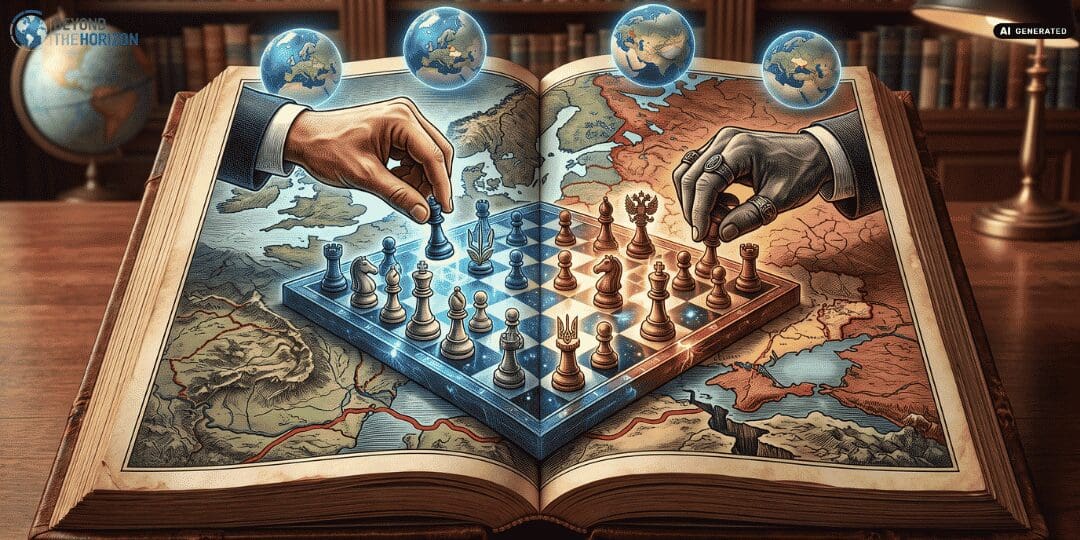
- Macron’s controversial stance on Western troop deployment to Ukraine: a closer look and its aftermath
In the last weeks, French President Emmanuel Macron defended his deliberate choice not to rule out the potential deployment of Western troops to Ukraine despite the controversy it has generated. Brushing off criticism from both domestic and international circles, Macron emphasized the careful consideration behind his statements regarding Russian aggression towards Ukraine. Speaking to reporters during a visit to the 2024 Olympic village near Paris, Macron underscored the gravity of the current geopolitical situation, stating that each word uttered on this matter was meticulously weighed and measured.
While the idea faced staunch opposition from NATO allies like the US, the UK, and Germany, it found some support from countries like Estonia and Lithuania. French officials sought to downplay Macron’s remarks, pointing to potential activities such as demining and arms production that could involve Western presence in Ukraine. During a meeting with French Foreign Minister Stéphane Séjourné, Lithuanian Foreign Minister Gabrielius Landsbergis said, “There cannot be any ‘buts.’ We must draw red lines for Russia, not ourselves. No form of support for Ukraine can be excluded. We need to continue supporting Ukraine wherever it’s most needed”, highlighting his worries about Moscow setting its prospects on the Baltic countries, which used to be part of the Soviet Union and are now members of the EU and NATO.
Meanwhile, the speaker of Russia’s lower house of Parliament cautioned Macron against sending troops, making historical parallels with Napoleon’s ill-fated campaign in 1812.
During the following days, France’s Foreign Minister Stephane Séjourné, emphasized the necessity of considering new measures to support Ukraine, highlighting areas such as mine clearance, cyber defense, and localized weapon production on Ukrainian soil. The French Foreign Minister asserted that certain actions might necessitate a presence in Ukraine without it to necessarily escalate to combat. Therefore, Séjourné reiterated that Macron’s stance remained open to various possibilities, emphasizing the President’s willingness to explore unconventional avenues of support.
However, following Macron’ statement the news is likely to be more than contradictory. On the one hand is the position of Elysian diplomacy, which has clarified that Macron’s intention was to stimulate discourse on the matter rather than propose concrete plans for troop deployment, combined to the deliberately reassuring and influential tones of the President’s interview given to TF1. On the other hand, POLITICO published an article highlighting that the French troops are adapting their training for potential high-intensity conflicts against adversaries like Russia, moving away from counterinsurgency tactics. The combat training center (CENTAC) in eastern France simulates battlefield conditions, emphasizing combined arms warfare and the use of advanced technology. Lessons from Ukraine highlight the importance of coordination and resilience. Soldiers undergo intense, 96-hour exercises, learning to operate without electronic devices and manage logistical challenges. Emphasis is placed on soldiers’ adaptability and decision-making under pressure. The goal is to ensure readiness and effectiveness in modern warfare scenarios.
- Macron’s speech to the Nation: “Russian victory would undermine EU security”
Last Thursday, March 14, on French national television, President Emmanuel Macron restated his resolute stance on the ongoing crisis in Ukraine. During the interview, Macron articulated his belief that the conflict in Ukraine carries profound implications for the security and integrity of Europe as a whole. He stated that any limitations imposed on aid to Ukraine would ultimately amount to choosing defeat in the face of Russian aggression. Macron warned that a scenario in which Russia emerges victorious in Ukraine would not only erode Europe’s credibility but also jeopardize its very security, reducing it to a severe state of vulnerability.
Against this backdrop, Macron called for a lucid reassessment of the prevailing circumstances, urging resolute action to prevent Russia from achieving its objectives in Ukraine. He addresses to the entire Nation, highlighting that “la sécurité des Français se joue en Ukraine”.
Moreover, Macron’s remarks reflect a broader diplomatic landscape in which tensions and diverging perspectives among European leaders have come to the forefront. While some leaders, such as the German Chancellor and the President of the United States, expressed profound reservations about such a move, Macron reiterated that all options, including the deployment of troops, should remain on the table.
In light of these developments, Macron’s interview underscores the need for a unified and decisive approach among European nations in addressing the crisis in Ukraine. Despite facing pushback from certain quarters, Macron has consistently advocated for robust support for Ukraine, viewing it as essential for safeguarding Europe’s security and integrity in the face of external threats.
The President’s speech is lucid and firm and almost reminiscent of fatherly tones toward the audience. It is clear that the purpose of the interview, for Macron, was partly to encourage, partly to warn the French people. The voice does not tremble, nor does it contain overly aggressive words. The message is very clear: reinterpreting Churchill’s famous Fulton speech, the French President reminds that today we must have “Le nerf de la paix”, adding that “vouloir la paix ce n’est pas choisir la défaite, ce n’est pas laisser tomber l’Ukraine”.
- Other NATO Allies’ position
The discourse surrounding the potential deployment of ground troops to Ukraine has ignited an outbreak of responses from various NATO countries, juxtaposing differing stances and strategies in navigating the conflict. French President Emmanuel Macron’s assertion that “nothing should be ruled out” concerning potential deployments prompted mainly negative, but also positive, reactions from leaders across NATO allies, amplifying the complexity of the situation. While acknowledging the possibility of security needs justifying elements of deployment, Macron emphasized France’s commitment to a nuanced approach in the face of mounting tensions. In response, US President Joe Biden reiterated his administration’s stance, emphasizing a path to victory through military aid rather than direct troop engagement. This sentiment was echoed by German Chancellor Olaf Scholz and UK Prime Minister Rishi Sunak, who highlighted existing agreements barring European or NATO member states from deploying troops to Ukraine, aside from limited training missions. Italy echoed similar sentiments, stating that international support for Ukraine should not involve ground troop presence, and cautioned against escalating tensions with Russia.
Sweden, the newest NATO’s ally, indicated that it does not envision sending ground troops to Ukraine at the present moment.
On the contrary, Lithuanian Foreign Minister Gabrielius Landsbergis has expressed openness to the discussions initiated by the French President regarding the possibility of NATO sending troops to Ukraine. Landsbergis emphasized that amidst the current crisis, no option should be dismissed outright. He highlighted the importance of ongoing discussions, noting that such deliberations prevent Putin from benefiting further from the situation.
While underscoring the importance of establishing clear red lines and avoiding strategic dilemmas for the Russian army within Ukraine, Landsbergis emphasized that it is premature to determine the most suitable options for troop deployment. He reiterated, though, that all possibilities should remain on the table.
Meanwhile, NATO Secretary General Jens Stoltenberg maintained that the alliance’s military support for Ukraine would remain limited to the supply of ammunition and equipment without considering any troop deployment. As discussions unfold, the urgency of the situation is underscored by Ukrainian President Volodymyr Zelenskyy’s appeal for creating a collective defense against Russian aggression. Zelenskyy’s participation in the Paris meeting via video link highlighted the gravity of the crisis and the imperative for international solidarity in confronting the ongoing conflict.