
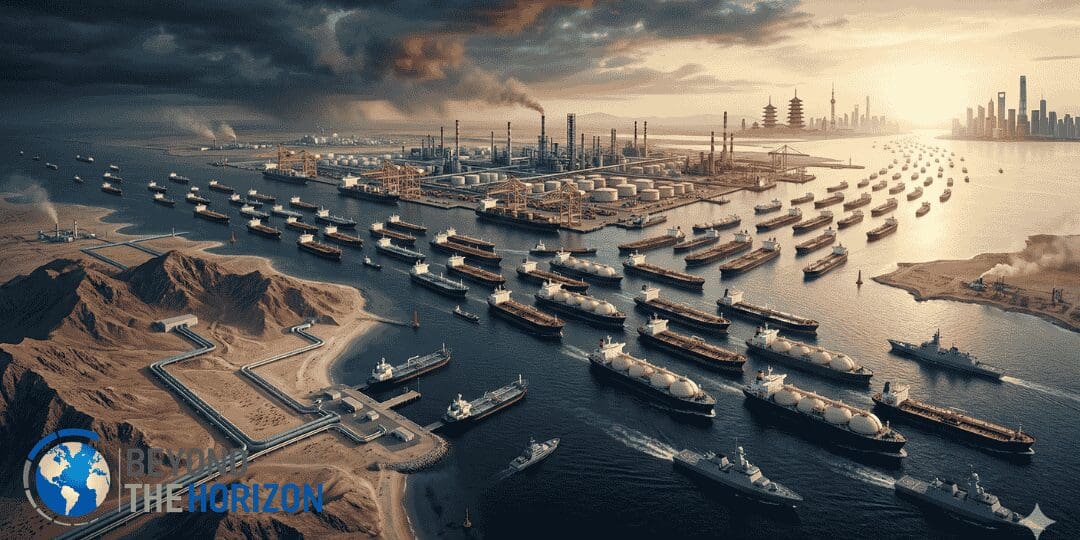
Global Energy's Most Critical Chokepoint
A strategic 21-mile-wide waterway serving as the primary exit point for oil and gas from the Persian Gulf to international markets.
Flowing through the strait (2024 avg), equaling ~20% of global consumption.
One-third of the world's Liquefied Natural Gas (primarily from Qatar).
Most shipments are bound for China, India, Japan, and South Korea.
Dominant Exporters (2024)
Saudi Arabia remains the largest individual contributor, moving 5.5 million b/d (38%) through the strait.
Regional Reliance
Asian economies are the most exposed to disruptions. In contrast, US reliance has dropped to just 7% of its total imports.
Hormuz vs. Alternative Routes
While Saudi Arabia and the UAE maintain pipelines (East-West and Fujairah) to bypass the strait, their combined excess capacity is only 2.6 million b/d—a fraction of the total 20 million b/d flow.
Geopolitical Flashpoints
1980 — 1988
The Tanker War
Iran and Iraq targeted each other’s commercial exports, causing major global shipping disruptions.
MAY 2019
Vessel Sabotage
Four tankers, including two Saudi vessels, were attacked off the UAE coast, raising insurance rates and tensions.
2023 — 2024
Tanker Seizures
Regular seizures of commercial vessels by Iran in retaliation for international sanctions and tanker detentions.
FEBRUARY 2026
Direct Military Confrontation
Tensions peaked following attacks on Iran, causing Brent crude prices to spike instantly on fears of a total strait closure.