
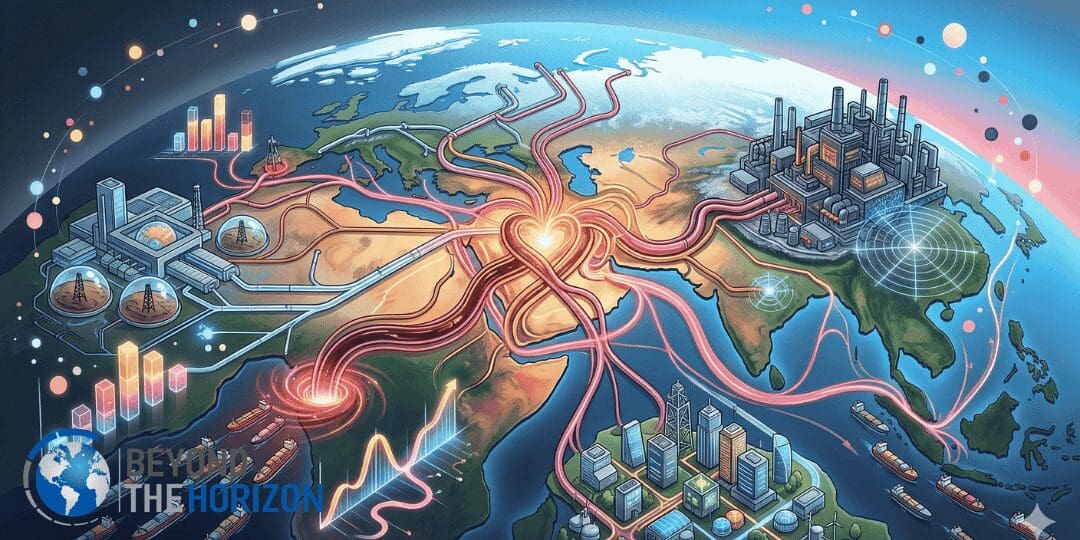
Great Power Energy Dependency & Vulnerability

Evaluating the Strategic Energy Dependency of Global Superpowers on the Middle East and the Resulting Geopolitical Vulnerabilities.

The Middle East remains the heartbeat of global energy markets. While the United States has transitioned toward energy independence, China's economic engine is increasingly lashed to the stability of the Persian Gulf, creating a fundamental asymmetry in global security priorities.

48% Proven Oil Reserves
21M Barrels/Day via Hormuz
53% China's Import Share

Direct Dependency (2024)

Percentage of crude oil imports sourced directly from the Middle East. Russia is excluded as a net exporter.

*Data Note: High dependency for China indicates a "Malacca Dilemma" where energy security is tied to narrow maritime corridors.

Strategic Divergence

Evolution of import dependency (2010 vs 2024). Note the US Shale Revolution impact.

*Insight: The US has effectively decoupled its physical supply from ME volatility, though global prices remain sensitive.

Vulnerability Index

A composite score (0-10) assessing risk based on three pillars:

  • Supply Shock Exposure
  • Logistical Chokepoints
  • Replacement Capability

Consumption Scale vs. Exposure

Plotting total daily oil consumption (Barrels) against Middle East dependency percentage. Bubble size represents GDP at risk.

High horizontal position indicates high volume risk; High vertical position indicates high structural reliance.

The Path of Risk: Flow Breakdown

SOURCE: THE PERSIAN GULF (60% OF WORLD'S SPARE CAPACITY)
CRITICAL CHOKEPOINT: STRAIT OF HORMUZ
↙ WESTWARD
SUEZ CANAL / RED SEA
EUROPEAN UNION (18% Exposure)
↘ EASTWARD
STRAIT OF MALACCA
CHINA (53% Exposure)

Data synthesized from IEA World Energy Outlook, EIA Country Analysis, and BP Statistical Review.

Infographic by Beyond the Horizon ISSG

Created with HTML, Tailwind CSS, and Chart.js

Home > Infographic > THE PETRO-POLITICAL DIVIDE
Loading...