
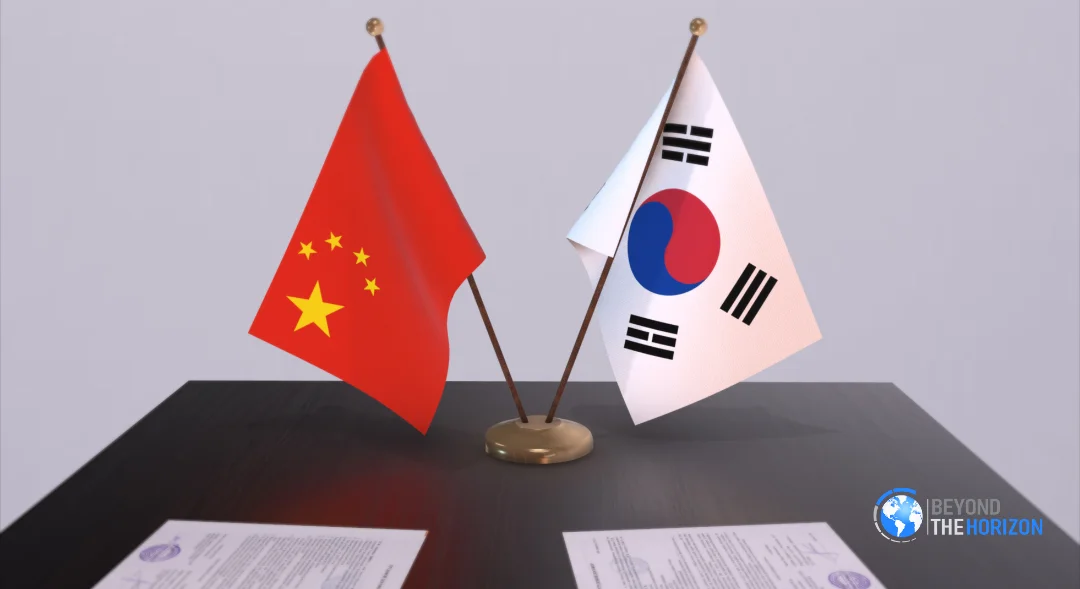
The Beijing Reset: A Strategic Pivot
On January 5, 2026, President Lee Jae-myung and President Xi Jinping formalized the "full restoration" of bilateral ties in Beijing. This summit marks the end of nearly a decade of strategic friction following the 2017 THAAD deployment. Both nations have agreed to institutionalize high-level communication and prioritize a "Strategic Cooperative Partnership" built on economic pragmatism and regional stability.
Bilateral Trade Volume (2024)
Resilient baseline for the 2026 restoration
Strategic Growth Sectors
The summit prioritized industries that align with demographic shifts and the fourth industrial revolution.
Agreement Distribution
Breakdown of the 15 signed documents by focus area
Geopolitical Equilibrium
President Lee faces the "Dual Track" challenge: maintaining the U.S. security alliance while restoring economic and diplomatic ties with China. The summit emphasized "Harmony without Uniformity."
Strategic Autonomy
Seoul aims to ensure that its military cooperation with the U.S. is not viewed by Beijing as a containment strategy.
One-China Principle
Lee reaffirmed respect for Beijing's core interests, a prerequisite for the full restoration of economic exchange.
Strategic Alignment Index
Remaining Diplomatic Friction
While relations have "reset," structural challenges remain that could impede long-term stability.
Divergence in "denuclearization" terminology remains a gap.
Beijing remains wary of high-tech naval upgrades in the ROK.
Managed via new vice-ministerial level talks.