
France's Historic Strategic Nuclear Expansion (2026)
The 2026 Announcement
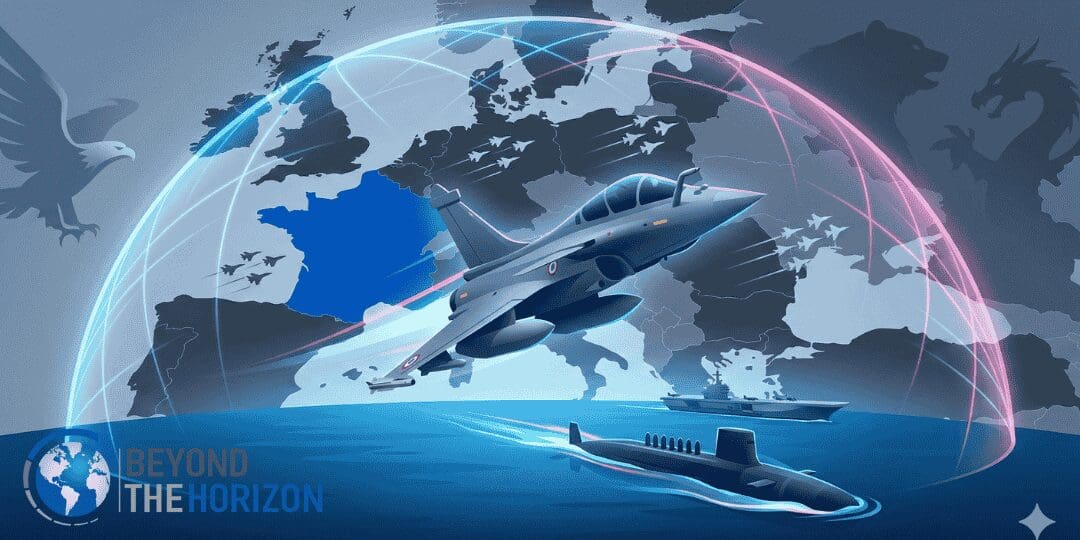
On March 2, 2026, President Emmanuel Macron introduced a fundamental evolution in French nuclear doctrine. Termed "Forward Deterrence," this strategy shifts France from a purely national posture to a quasi-European component, designed to complicate strategic calculations for adversaries.
Geopolitical Drivers
Russian Threat
Persistent aggression and nuclear signaling in Eastern Europe.
China Growth
The rapid military expansion and nuclear build-up in the Pacific.
U.S. Reliability
Unease about shifting U.S. defense priorities toward Asia.
European Allied Framework
Intensity of doctrinal cooperation by partner state
Germany leads through a "Nuclear Steering Group" while Poland provides the primary geographical footprint for operations.
Deterrent Force Composition
Baseline allocation of France's "Triad-Lite"
Submarines (SSBNs) provide the Second Strike backbone, while Rafale jets enable Forward Presence on allied territory.
Strategic Tensions
NATO Complementarity
Paris maintains this strengthens NATO, but some allies fear it signals a "hedge" against a U.S. security withdrawal.
Sovereignty vs. Collaboration
Macron insists France alone retains launch authority, leading to domestic debate over whether "forwarding" deterrence dilutes control.