

11 SEPTEMBER 2026
Europe is rearming while one of the foundations of its power is being tested: the ability to compete industrially. Volkswagen’s proposed conversion of its Osnabrück plant into a defence production site captures that tension. The agreement could preserve skilled employment and support air defence, but Chinese competition exposes weaknesses that military orders alone cannot resolve. EU defence spending rose by 78.6% in real terms between 2020 and 2025, yet European auditors warn that fragmented planning can leave capability gaps intact. This week’s analysis and infographic examine whether industrial conversion can strengthen security while Europe rebuilds the civilian competitiveness that finances it. The central question is how to expand defence capacity without allowing rearmament to obscure the need for economic renewal.
Ukraine makes the consequences of inadequate delivery immediate. Kyiv is seeking earlier access to the EU’s €90 billion loan and funding for Patriot interceptors, while Estonia’s €70 million ammunition dispute demonstrates how committed resources can fail to reach the battlefield. Poland’s emphasis on domestic production and the EU–Ukraine Drone Alliance offer routes towards stronger supply, provided contracts produce dependable output. Those supply chains also need protection. Denmark’s warning of Russian sabotage preparations, the Munich arson investigation and Serbia’s inquiry into the movement of explosives and drones expose different vulnerabilities. Their connections and sponsors require evidence. Europe must improve procurement oversight and industrial security together, ensuring that additional expenditure produces equipment that can be delivered, maintained and replenished under pressure.
Political cohesion remains equally consequential. Proposals to restructure the EU’s diplomatic service, the cancellation of Kaja Kallas’s defence advisory group and eleven governments’ push for greater majority voting reveal competing views of European authority. Our Map of the Week charts that reform effort as Russian retaliation over Leipzig and the AfD’s electoral advance increase pressure on Germany. US envoys’ visits to Moscow and Kyiv keep negotiations active, while Washington’s reimbursement demands complicate support for Ukraine. Spectrum’s orbital success, featured in our Photo of the Week, offers a technological opening against political friction surrounding the Paris space summit. Europe’s security will depend on connecting these ambitions with competitive industry, accountable procurement and political commitments that endure through prolonged competition and crisis.
- Key Developments
- Statistics of the Week
- Map of the Week
- Photo of the Week
- Infographic of the Week
- Analysis
Commission Considers Restructuring the EU’s Diplomatic Service
European Commission officials are examining options to restructure the European External Action Service (EEAS), potentially dispersing its functions among existing Commission departments, according to a Financial Times report carried by Reuters. The discussions reflect dissatisfaction with the EU’s response to successive international crises and questions about the diplomatic service’s effectiveness. The report described options under consideration, rather than an agreed institutional overhaul; Reuters said it could not independently verify the information.
A restructuring could bring diplomatic activity closer to the Commission’s economic, trade and financial instruments. Its strategic value would nevertheless depend on whether member states can agree on common objectives. Redistributing institutional responsibilities alone would leave the central obstacle to a coherent European foreign policy—divergent national positions—largely unresolved.
Member States Halt Kallas’s Defence Advisory Group
EU foreign policy chief Kaja Kallas’s proposed defence advisory group was shelved before its planned launch on 7 September following opposition from member states. The initiative would have brought together former political and military leaders from the EU, the United Kingdom and Ukraine to advise on strengthening European defence. France, Germany and Italy opposed the proposal, while the cancellation exposed tensions over the EEAS’s role and the division of responsibilities between EU institutions and national governments.
The episode demonstrates how institutional disagreements can constrain defence cooperation even when an initiative has only an advisory mandate. For Kallas, the immediate challenge is securing national support for her defence agenda. For the EU more broadly, the cancellation raises questions about how to obtain independent strategic advice without creating structures that governments consider duplicative or insufficiently accountable.
Denmark Sends Conscripts to Greenland for Arctic Training
Denmark has deployed conscripts to Greenland under its expanded military service programme, Reuters reported on 2 September. Their training forms part of Arctic Endurance and supports NATO’s Arctic Sentry activity. The deployment comes amid heightened Arctic tensions and continuing US demands concerning Greenland, which Copenhagen and Nuuk reject.
The deployment develops practical experience of operating in Greenland’s difficult terrain while reinforcing Denmark’s presence. Sustained Arctic readiness will also require transport, infrastructure and reliable resupply. The political challenge remains maintaining allied cooperation while defending Greenland’s sovereignty.
Poland Prioritises Domestic Defence Production
Poland is shifting greater attention towards domestic and regional defence production as it expands its armed forces. Reuters reported increased procurement from Polish and Central European suppliers, alongside efforts to secure technology transfers and industrial partnerships. The shift follows substantial purchases of foreign military equipment.
Local production could strengthen Poland’s ability to replenish ammunition, maintain equipment and sustain operations during a prolonged crisis. Its value will depend on whether contracts deliver usable technology and manufacturing capacity. Assembly work alone would leave important dependencies on foreign components and technical support.
Moscow Highlights Financial Contacts as Washington Conditions Relief
Russian Finance Minister Anton Siluanov said on 2 September that Moscow and Washington had identified grounds for developing financial ties following his first bilateral meeting with US Treasury Secretary Scott Bessent. However, a source cited by Reuters said Bessent had made clear that economic relief or other agreements would require an end to the war in Ukraine. The two accounts therefore presented markedly different emphases concerning the significance of the meeting.
The contact establishes a channel for discussing possible economic normalisation, but provides no evidence that sanctions relief has been agreed. European governments will need to monitor whether US economic diplomacy remains conditional on a settlement and coordinated with the wider sanctions regime.
Europe Revisits Ukraine’s Financing Options
EU governments are considering bringing forward payments from the €90 billion loan intended to support Ukraine across 2026 and 2027. At informal ministerial meetings in Ireland, Kyiv sought earlier access to funds scheduled for next year, and Ireland reported substantial support for accelerating disbursement. Several governments also renewed calls to use immobilised Russian sovereign assets, although Belgium maintained its objections over legal and financial exposure. Neither discussion amounted to an agreed additional funding package.
Earlier payments could address immediate procurement needs, but would also bring forward the point at which further financing becomes necessary. The underlying challenge is securing predictable support over several years. Proposals involving Russian assets additionally require agreement on who would bear the associated liabilities.
Brussels Responds Positively to Turkey’s Mecca Defence Pact
Brussels has responded positively to the defence pact linking Turkey, Saudi Arabia and Pakistan, despite concerns about potential exposure of sensitive technology through Pakistan’s close defence relationship with China. The agreement, signed in August, includes a mutual defence commitment. Turkish diplomatic sources described it as complementary to NATO, while the arrangement combines Turkey’s defence industry, Saudi financial resources and Pakistan’s military capabilities.
For Europe, the pact creates potential industrial opportunities alongside questions about technology protection and competing security commitments. Its practical consequences will depend on procurement, information sharing and operational arrangements. Concerns about Chinese access warrant scrutiny, but do not themselves establish that an espionage breach has occurred.
Miliband Joins European Foreign Ministers in Ireland
British Foreign Secretary Ed Miliband joined European foreign ministers in Ireland as London and its partners discussed regional security and support for Ukraine. The visit also provided an opportunity to strengthen British–Irish relations, with Irish Foreign Minister Helen McEntee subsequently highlighting their engagement as part of a broader improvement in bilateral cooperation.
The meeting offers a practical means of developing the UK–EU security relationship through regular consultation. Its significance will depend on whether political access produces closer coordination on sanctions, military assistance and crisis management. Sustained participation could help reduce the friction that arises when closely aligned European partners operate through separate institutional processes.
Eleven EU Governments Push for More Majority Voting
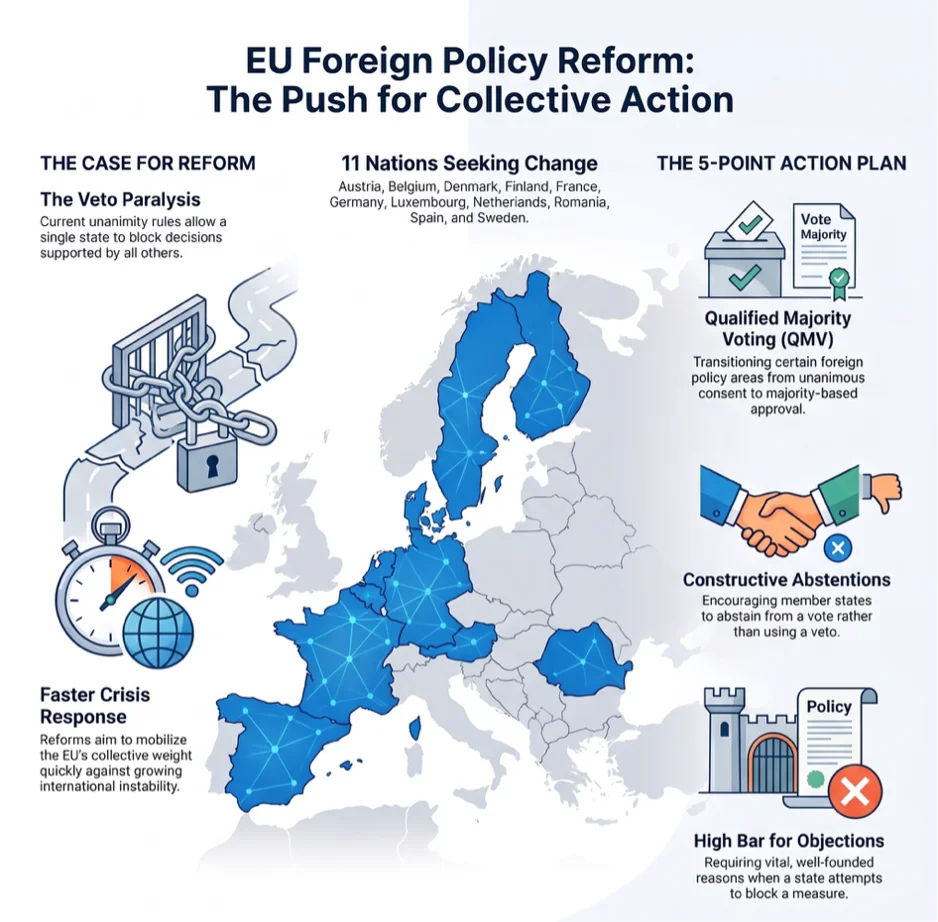
Eleven EU governments, including France, Germany and Spain, have urged Kaja Kallas to make greater use of existing treaty provisions allowing qualified-majority voting in foreign policy. Their proposals also encourage constructive abstention and seek to discourage governments from blocking decisions over unrelated disputes. The initiative concerns greater use of available procedures rather than an agreed replacement of unanimity across EU foreign and security policy.
Wider use of majority voting could accelerate decisions and reduce opportunities for individual governments to extract concessions through veto threats. Its political durability would depend on reassuring states that their essential interests remain protected. The central question is whether procedural flexibility can improve collective action while preserving the willingness of governments to implement decisions.
Russia Orders Goethe-Institut Closures
Russia announced on 3 September that Goethe-Institut branches in Moscow, St Petersburg and Yekaterinburg would close. Moscow presented the decision as retaliation for Germany’s closure of the Russian House cultural centre in Berlin and Russia’s consulate in Bonn following the Leipzig drone incident.
The closures extend the diplomatic confrontation into cultural and educational relations. Their lasting effect could be to weaken direct connections between German and Russian societies, making future engagement harder even if official relations improve. Reciprocal closures also narrow channels for maintaining contact during an already severe political dispute.
Estonia Pursues Recovery of Funds from Failed Ammunition Contracts
Estonia is pursuing legal and arbitration proceedings over ammunition contracts with Datasel S.R.L., following approximately €70 million in advance payments for supplies intended for Ukraine. The procurement was financed through the European Peace Facility. Estonia’s defence investment agency subsequently acknowledged that it could not produce documentation explaining how Datasel had been selected or vetted. The company has filed a counterclaim, and the disputes remain unresolved.
The case exposes the operational consequences of inadequate procurement oversight: money committed to urgent military assistance may fail to produce usable supplies. Recovery proceedings are necessary, but prevention requires documented supplier checks, enforceable guarantees and verification of production capacity. Emergency procurement needs procedures that preserve speed while making responsibility and contractual performance traceable.
Ukraine Seeks EU Financing for Patriot Interceptors
Ukraine has formally requested billions of euros from the EU’s €90 billion loan programme to purchase US-made PAC-3 interceptors for its Patriot air-defence systems. Commission President Ursula von der Leyen confirmed the request on 2 September. The proposal concerns missiles for existing systems, rather than simply the acquisition of additional Patriot batteries, and requires consideration of an exemption from the programme’s European procurement preferences.
The request highlights the tension between supporting Europe’s defence industry and meeting Ukraine’s immediate operational requirements. Funding an established capability could strengthen protection against ballistic missiles, but financing alone cannot guarantee delivery schedules. The decision therefore turns on both procurement eligibility and the availability of interceptors from production lines or existing stocks.
EU Searches for a Stronger Response to Leipzig
EU foreign ministers struggled to identify a fresh collective response after Germany attributed the Leipzig drone incident to Russia. Kaja Kallas said the attack bore the hallmarks of state-sponsored terrorism. Discussions included stronger sanctions and proposals from some governments for further diplomatic restrictions, including expulsions and consular closures. The exchanges illustrated pressure for a more forceful response without establishing agreement on a comprehensive new package.
The strategic test is whether additional measures can disrupt the personnel, financing and logistical networks involved in hostile operations. Diplomatic signalling may demonstrate solidarity, but deterrence also requires credible attribution, coordinated investigations and practical protection for vulnerable infrastructure. Measures that impose costs without affecting operational capacity may have limited preventive value.
White House Pressure Disrupts Paris Space Summit
The White House urged US space companies to reconsider attending France’s September space summit, Reuters reported, citing sources familiar with the discussions. SpaceX, Blue Origin, Stoke Space and Starcloud subsequently cancelled their participation. The pressure took the form of strong discouragement rather than an explicit prohibition.
The episode exposes how political disputes can affect commercial space cooperation. For Europe, dependable access to launch services and satellite capabilities increasingly requires attention to suppliers’ political constraints as well as their technical performance and prices.
India and Belgium Expand Defence and Strategic Cooperation
India and Belgium agreed to strengthen defence cooperation during Prime Minister Bart De Wever’s visit to India on 2–4 September. Their joint statement welcomed a defence Letter of Intent covering military engagement, training, research and industrial cooperation. The leaders also supported closer defence representation and a planned visit by the Belgian frigate Leopold I to India in November. Alongside these measures, they sought deeper trade and investment relations and cooperation against organised crime and cybercrime.
For Belgium, the agreement broadens security engagement with an important Indo-Pacific partner and creates opportunities for defence companies. Its practical significance will depend on subsequent projects, technology arrangements and sustained military contacts. The framework supports diversification of European partnerships, while leaving both countries considerable freedom over their wider diplomatic and security relationships.
Trump Demands European Reimbursement for Past Ukraine Aid
President Donald Trump said on 3 September that the United States would seek repayment from Europe for previous American assistance to Ukraine. He also indicated that US requirements were taking priority over some ammunition sales. His remarks did not establish a negotiated reimbursement mechanism or an agreed European liability.
The demand introduces further uncertainty into European planning for Ukraine’s support. Governments must now assess both future access to American equipment and the possibility that Washington will attach additional financial conditions to security cooperation.
Norway Seizes Russian Vessel over Naftogaz Award
Norwegian authorities seized the Russian vessel Professor Molchanov at Barentsburg, Svalbard, as part of Naftogaz’s efforts to enforce an arbitration award concerning assets expropriated in Crimea. The company announced the action on 2 September. Russia condemned the seizure and disputed the enforcement proceedings.
The case demonstrates how Ukraine’s compensation claims can affect Russian assets abroad. Enforcement through national courts creates pressure beyond sanctions, while requiring asset-specific legal decisions. Its Arctic location also gives a commercial dispute additional diplomatic sensitivity for Norway and Russia.
German Police Investigate Arson at Defence Technology Site
German police investigated an attempted arson attack at a construction site near Rohde & Schwarz’s Munich headquarters on 3 September. Two Bulgarian nationals, a woman and a man, were arrested. Incendiary devices caused limited damage, and no injuries were reported. Authorities had not established Russian involvement in the case.
The incident reinforces the importance of protecting defence production and associated construction sites. Determining motive and any external direction remains essential: a credible security response requires evidence linking suspects, organisers and intended targets.
Putin Cites Peace Prospects While Criticising Ukraine’s Aviation Warning
Vladimir Putin said on 3 September that a peace agreement remained possible, while arguing that Ukrainian attacks and warnings about Russian airspace made progress harder. Kyiv had warned that expanding drone operations made Russian airspace unsafe for commercial aviation. The warning did not amount to an announcement that Ukraine would target civilian aircraft.
Putin’s comments keep diplomacy publicly open while placing responsibility for obstacles on Kyiv. Their significance depends on subsequent negotiating positions; expressions of optimism alone provide little evidence of movement towards an enforceable settlement.
EU Auditors Warn of Fragmented Defence Planning
The European Court of Auditors has warned that Europe’s defence expansion is weakened by insufficient coordination and the absence of effective planning across EU initiatives. Its review identifies risks of duplication, capability gaps and fragmented investment, despite sharply increased spending. The findings also question how readily additional resources can be converted into the capabilities required for the EU’s 2030 readiness ambitions.
The review strengthens the case for judging defence investment through operational outcomes: deployable forces, available ammunition, maintenance capacity and interoperable equipment. Better coordination must connect financing decisions with agreed capability requirements and realistic industrial delivery schedules. Without that connection, higher national expenditure could reproduce existing fragmentation on a larger and more expensive scale.
Serbia Investigates Group Moving Explosives and Drones into the EU
Serbian prosecutors said on 3 September that they were investigating a seven-person group suspected of obtaining explosives and drones in Serbia and moving them to predetermined locations inside the European Union. Four suspects had been detained. The announcement established an investigation into cross-border activity, but did not itself resolve the intended targets or identify a state sponsor.
The case illustrates the importance of examining the supply and transport networks behind potential sabotage operations. Cooperation between Serbian authorities and EU investigators could clarify how equipment, intermediaries and financing were connected. Establishing those relationships would help authorities disrupt preparations before an attack, while avoiding premature conclusions about responsibility.
Denmark Warns of Russian Sabotage Preparations
Denmark’s security service, PET, warned on 3 September that Russia was preparing sabotage against Danish companies associated with support for Ukraine. Officials described recruitment through social media and gaming platforms, including requests for ordinary people to photograph companies and infrastructure. PET said concrete planning was underway and had warned relevant businesses.
The warning highlights how seemingly minor tasks can support a larger hostile operation. Protecting defence suppliers therefore requires attention to reconnaissance, suspicious approaches and contractor access alongside physical security. The announcement concerns preparations and recruitment; it does not establish that the planned attacks were completed.
Estonia’s Defence Minister Resigns over Ammunition Procurement Dispute
Estonian Defence Minister Hanno Pevkur announced his resignation on 2 September amid controversy over approximately €70 million in EU-funded ammunition procurement for Ukraine and wider criticism of financial management. The disputed purchases involved advance payments to a supplier that failed to deliver as expected. The European Commission was examining Estonia’s handling of the funds and the possibility of repayment.
The resignation turns a procurement failure into a question of political accountability and confidence in the administration of military assistance. It does not establish personal criminal wrongdoing by the minister. The substantive test for his successor will be whether corrective measures strengthen supplier verification, financial safeguards and reporting while preserving Estonia’s ability to deliver urgent support to Ukraine.
Pistorius Secures Washington Meeting with Hegseth
German Defence Minister Boris Pistorius is scheduled to meet US Defence Secretary Pete Hegseth in Washington on 15 September, following an earlier unsuccessful attempt to secure a meeting. The visit is also expected to include the rollout of Germany’s first F-35 in Texas, connecting the diplomatic engagement with a major component of German military modernisation
The meeting offers an opportunity to clarify American intentions and address strains in the bilateral defence relationship. Germany’s expanding investment gives Berlin a stronger basis for discussion, while programmes such as the F-35 underline enduring operational and industrial ties. The quality of any assurances on cooperation and force posture will matter more than the resumption of ministerial contact alone.
Lavrov Escalates Rhetoric towards Germany
Russian Foreign Minister Sergei Lavrov rejected accusations of Russian involvement in the Leipzig drone incident on 6 September and accused Germany of moving towards a “real war” with Russia. His remarks linked the dispute to German rearmament and Berlin’s broader support for Ukraine, further intensifying the confrontation between the two governments.
The language can be read as an attempt to raise the perceived costs of German policy and influence domestic debate. It constitutes political escalation, but does not establish a declaration of war or an operational decision to attack Germany. Assessing the threat requires attention to accompanying military activity and covert operations.
US Envoys Visit Moscow and Kyiv in Renewed Peace Effort
US envoys Steve Witkoff and Jared Kushner met Vladimir Putin in Moscow on 5 September before travelling to Kyiv for talks with Volodymyr Zelenskyy on 6 September. Their first Kyiv visit as envoys included engagement alongside British, French and German national security advisers. The meetings renewed discussion of further negotiations, but produced no announced comprehensive settlement or lasting ceasefire.
The shuttle diplomacy gives Washington direct access to both sides while maintaining European involvement in the Kyiv discussions. Its success will depend on narrowing substantive disagreements over territory, security guarantees and enforcement. Continued meetings demonstrate that a diplomatic channel remains active; they do not establish that the parties’ conditions for ending the war have converged.
German Spectrum Rocket Reaches Orbit from Norway
Isar Aerospace’s Spectrum rocket launched from Andøya in Norway on 5 September and reached orbit, marking the first commercial orbital launch from continental Europe. The mission carried small satellites and a technology experiment, following the failure of the company’s first launch attempt in 2025.
The achievement expands Europe’s options for independent access to space. Its security value will depend on reliable repeat launches, available capacity and sustainable costs. A successful mission is a significant milestone, while a dependable launch service requires consistent performance over time.
AfD Wins Saxony-Anhalt Election but Faces Coalition Barrier
Alternative for Germany won approximately 44% of the vote in Saxony-Anhalt’s 6 September state election, securing a commanding first place while falling short of an outright majority. The result strengthened its claim to lead a state government, but coalition arithmetic and other parties’ refusal to cooperate remained decisive obstacles.
The victory increases pressure on Germany’s established parties and could intensify debate over Ukraine, Russia and defence expenditure. A state election does not directly determine federal foreign policy, but its political effects can constrain national leaders’ room for manoeuvre.
Leonardo Plans Ukrainian Trials of Michelangelo’s Counter-Drone Component
Leonardo plans to test elements of its Michelangelo Dome air-defence architecture in Ukraine before the end of 2026. Initial trials will focus on counter-drone capabilities, with broader NATO testing envisaged subsequently. The project seeks to connect sensors, command systems and defensive equipment within an integrated architecture; the planned Ukrainian deployment should therefore be understood as testing an initial component rather than fielding the entire proposed shield.
Operational testing could help assess performance against evolving drone threats and identify integration problems early. For European air defence, the wider value lies in turning battlefield experience into affordable, interoperable capabilities. Claims about broader protection against advanced missiles will require separate demonstration and should remain distinct from the objectives of the initial trials.
Commission Prepares First EU–Ukraine Drone Industry Meeting
The European Commission is preparing the first meeting of the EU–Ukraine Drone Alliance in Brussels in September. Launched in July, the alliance brings together 18 founding members, equally divided between the EU and Ukraine, to advance drone and counter-drone technologies. The meeting is intended to organise the industry’s work and establish a timetable for cooperation.
The initiative could connect Ukrainian operational experience with European financing and manufacturing capacity. Its impact will depend on translating exchanges into production agreements, procurement and rapid technical adaptation. Clear arrangements for intellectual property, testing and information sharing will be important if cooperation is to benefit Ukrainian developers while improving Europe’s ability to produce relevant systems at scale.
Belgium Discloses Semiconductor Espionage Investigation
Belgian prosecutors disclosed on 7 September that a former senior employee of chipmaker Belgan had been detained since May on suspicion of transferring sensitive semiconductor information to a Chinese company. The 52-year-old holds Belgian and Chinese nationality. The investigation concerns gallium nitride technology with civilian and military applications; a second suspect remained at large.
The case highlights the importance of protecting specialised manufacturing knowledge and monitoring conflicts of interest. The allegations remain subject to investigation and do not establish either guilt or direction by the Chinese state.
Russia Orders German Consulate in St Petersburg to Close
Russia ordered the closure of Germany’s consulate in St Petersburg on 7 September, escalating the diplomatic dispute following the Leipzig drone incident. Moscow presented the measure as retaliation for German action against Russian diplomatic and cultural institutions. It followed Russia’s announcement that Goethe-Institut branches would close.
The decision further reduces Germany’s official presence in Russia and complicates consular engagement. Repeated reciprocal closures may satisfy demands for a visible response while progressively removing the channels needed to manage incidents, protect citizens and sustain communication during a crisis.
Preliminary Deal Envisages Defence Production at Volkswagen’s Osnabrück Plant
A preliminary agreement envisages Israeli investor Aurelius Capital and Lower Saxony taking over Volkswagen’s Osnabrück plant for defence-related production after vehicle manufacturing ends in 2027. Initial plans include components for Rafael air-defence systems and the preservation of around 1,400 of the site’s approximately 1,800 jobs.
The proposal illustrates how automotive restructuring could contribute to defence industrial expansion. Implementation will require firm orders, investment and workforce preparation. Existing factory capacity offers a starting point, but conversion into dependable military production remains a substantial undertaking.
Belgium Reports Record Defence Recruitment Applications
Belgian Defence Minister Theo Francken reported more than 16,000 applications during the last recruitment year, with 2,993 military personnel recruited against a target of 2,500. The figures, announced on 7 September, also included 829 reservists and 695 civilian employees. Belgium additionally reported that all 500 places in its 2026 Military Service Year had been filled as it opened recruitment for the next cycle.
The results provide a stronger personnel foundation for Belgium’s defence expansion, but applications and recruitment totals do not measure net force growth. Retention, training capacity and the availability of experienced instructors will determine how quickly new entrants become operationally useful. Sustaining technical, logistical and cyber expertise will be as important as attracting candidates to combat roles.
Finland Plans Classified Defence Briefings for Political Parties
Finland plans to brief political parties on classified defence shortcomings as the government prepares a substantial programme of security-related legislation. The initiative follows Defence Minister Antti Häkkänen’s earlier concern that party leaders had not been adequately informed about the country’s long-term defence financing requirements, despite parliamentary work on the issue.
Giving parties access to a common assessment could strengthen agreement on spending priorities that extend beyond one parliamentary term. The challenge is to support informed democratic scrutiny while protecting operationally sensitive information. Broad political backing will be more durable if funding decisions are connected to clearly understood capability requirements and implementation plans.
Swiss Neutrality Referendum Puts Sanctions Policy in Focus
Switzerland will vote on 27 September on an initiative seeking to entrench a stricter definition of neutrality in the constitution. The proposal would constrain participation in sanctions against belligerent states, subject to specified exceptions, and restrict military cooperation and alliance participation. The Federal Council opposes the initiative, arguing that Switzerland needs flexibility to protect its interests and respond to international developments.
The vote could affect Switzerland’s ability to align with European sanctions against Russia and develop security cooperation with neighbouring states. It concerns the interpretation and practical application of neutrality, which Switzerland already maintains. For European partners, the consequential question is how any new constitutional restrictions would influence sanctions coordination and cooperation during future crises.
Merz’s Absence Complicates Macron’s Space Summit
German Chancellor Friedrich Merz will miss the international space summit in Paris on 9–10 September, with scheduling constraints cited for his absence. Germany nevertheless remains a co-chair and is expected to be represented by Defence Minister Boris Pistorius and Research and Space Minister Dorothee Bär. The announcement comes as US corporate withdrawals place additional pressure on the event.
Merz’s absence weakens the summit’s political presentation, but continued ministerial participation leaves scope for substantive cooperation. European space ambitions will depend on Franco-German agreement over programmes, financing and industrial responsibilities. The absence alone does not establish a German boycott or support for Washington’s pressure on the event.
European Security Impact Dashboard
|
Development |
Significance level |
Why it matters for European security |
|
High |
PET’s warning puts companies supplying Ukraine at direct risk and strengthens the case for disrupting reconnaissance and recruitment before attacks occur. |
|
|
High |
Exposes the gap between attributing hostile operations to Russia and agreeing collective measures that raise their costs and protect vulnerable infrastructure. |
|
|
High |
Adds uncertainty to European support planning and access to US equipment, although no reimbursement mechanism or European repayment obligation has been agreed. |
|
|
High |
Highlights urgent air-defence needs and dependence on US interceptors; EU financing would still require procurement approval and available supplies. |
|
|
High |
Earlier loan payments could ease immediate shortages but advance future financing needs; using frozen Russian assets remains contested. |
|
|
High |
Shows why increased spending may leave capability gaps unresolved when procurement, industrial capacity and operational requirements are insufficiently coordinated. |
|
|
High |
Exposes procurement failures that deprived Ukraine of expected ammunition and put EU funds at risk; recovery and counterclaims remain unresolved. |
|
|
High |
Could strengthen ammunition supply, maintenance and wartime endurance, provided industrial partnerships deliver usable technology and sustained production capacity. |
|
|
High |
Sustains a potentially consequential negotiating channel with European involvement, but no settlement or lasting ceasefire has emerged. |
|
|
High |
Exposes political constraints on commercial space cooperation and strengthens the case for dependable European launch and satellite capabilities. |
|
|
High |
Adds security commitments alongside Turkey’s NATO membership and raises questions about technology safeguards in cooperation with Pakistan and Saudi Arabia. |
|
|
High |
Could reshape how diplomacy connects with EU economic instruments, but remains a reported proposal and would not resolve divergent national foreign policies. |
|
|
High |
Could reduce veto obstruction and accelerate EU foreign-policy decisions; the initiative proposes wider use of existing procedures, with implementation still unsettled. |
|
|
High |
Intensifies pressure on Germany’s established parties and Ukraine policy debate, while coalition barriers and federal powers limit its immediate security effects. |
|
|
Medium |
Highlights suspected cross-border logistics for potential attacks inside the EU; targets, external direction and links to other incidents remain unestablished. |
|
|
Medium |
Reinforces the need to protect defence facilities and construction sites; limited damage and unresolved attribution constrain conclusions about wider strategic effects. |
|
|
Medium |
Raises political pressure on Berlin and the risk of misperception, but does not establish a declaration of war or an attack decision. |
|
|
Medium |
Narrows Germany’s official presence and consular channels, complicating communication and citizen support during an escalating bilateral dispute. |
|
|
Medium |
Extends retaliation into cultural relations and weakens societal links that could support future engagement, without directly changing military capabilities. |
|
|
Medium |
Turns procurement failures into a leadership and accountability crisis; political responsibility does not establish personal criminal wrongdoing or guarantee corrective reform. |
|
|
Medium |
Exposes institutional friction over European defence leadership, while cancellation of an advisory body has limited immediate effects on military readiness. |
|
|
Medium |
Builds Arctic operating experience and reinforces Denmark’s presence, while sustained readiness still depends on transport, infrastructure and reliable resupply. |
|
|
Medium |
Highlights risks to sensitive semiconductor knowledge; the allegations do not yet establish guilt, the scale of technology loss or Chinese state direction. |
|
|
Medium |
Expands Europe’s launch options, but a first successful orbital mission must become a reliable service before it materially reduces strategic dependence. |
|
|
Medium |
Could improve European air defence through operational testing; the initial counter-drone component does not establish the full Michelangelo architecture’s capabilities. |
|
|
Medium |
Connects Ukrainian experience with European industry, but its practical value depends on production agreements, procurement and rapid adaptation. |
|
|
Medium |
Offers a route to expand manufacturing capacity and retain skills, but the preliminary deal still requires investment, firm orders and workforce preparation. |
|
|
Medium |
Strengthens recruitment prospects, but applications and intake figures do not establish net force growth, retention or the availability of trained personnel. |
|
|
Medium |
Could strengthen parliamentary agreement on defence priorities and funding; the briefing itself adds no immediate military capability. |
|
|
Medium |
Could constrain alignment with European sanctions and military cooperation if approved; the proposed constitutional restrictions are not yet in force. |
|
|
Medium |
Opens a channel for economic talks, while US conditions tie relief to ending the war; no sanctions rollback is established. |
|
|
Medium |
Keeps diplomacy publicly open while blaming Kyiv for obstacles, but the statements reveal no substantive concession or enforceable path to a settlement. |
|
|
Medium |
Creates an opportunity to clarify US defence intentions, without yet securing assurances on force posture or future cooperation. |
|
|
Medium |
Supports regular UK–EU security consultation, with practical gains dependent on subsequent coordination over sanctions, military assistance and crisis management. |
|
|
Medium |
Broadens Belgium’s Indo-Pacific partnerships; industrial projects and sustained military engagement will determine the agreement’s practical value. |
|
|
Medium |
Extends Ukraine’s compensation efforts into asset-specific court enforcement, while the Svalbard location adds Arctic diplomatic sensitivity. |
|
|
Medium |
Weakens the summit’s political presentation, although German ministerial participation and continued co-chairmanship leave room for substantive cooperation. |
78.6%: Europe’s Defence Spending Surge and the Challenge of Readiness
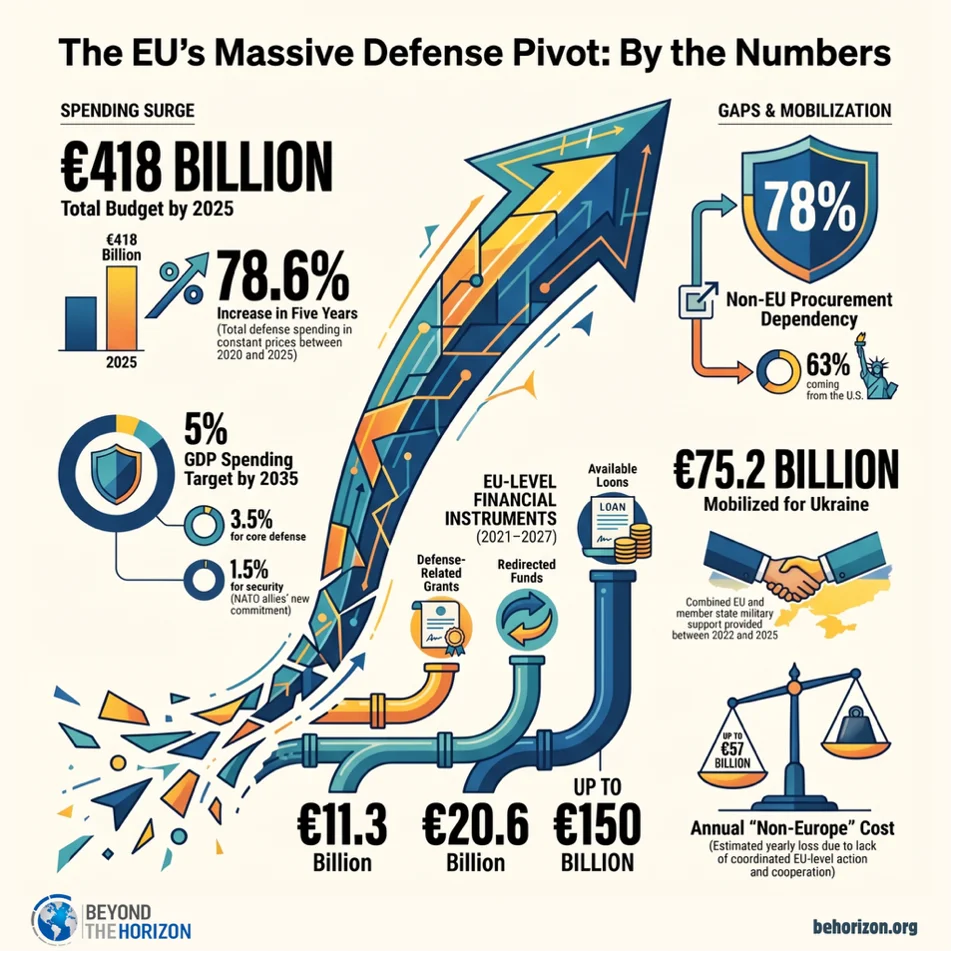
EU member states’ combined defence spending increased by 78.6% in real terms between 2020 and 2025, according to the European Court of Auditors’ latest review. Their annual defence budgets reached €418 billion in 2025, illustrating the scale of Europe’s financial response to its deteriorating security environment. Alongside national spending, EU instruments for 2021–2027 include €11.3 billion allocated to defence-related programmes, an estimated €20.6 billion redirected from other funds, and up to €150 billion in available loans. These commitments provide substantial scope to expand production and address capability shortages. European Court of Auditors
The graphic also highlights Europe’s industrial dependence: 78% of member states’ defence acquisitions between Russia’s full-scale invasion and June 2023 came from outside the EU, with the United States accounting for 63% of total acquisitions. Those percentages describe that earlier procurement period, rather than the current purchasing mix. The Court warns that fragmented planning, manufacturing delays and insufficient coordination can limit the military benefits of higher expenditure. The figures therefore suggest that Europe’s progress should also be measured through delivery times, replenished stockpiles and forces’ ability to operate together.
Eleven Governments Push for Faster EU Foreign-Policy Decisions
This week’s map highlights eleven EU governments seeking to reduce obstruction in European foreign policy: Austria, Belgium, Denmark, Finland, France, Germany, Luxembourg, the Netherlands, Romania, Spain and Sweden. Their joint letter to Kaja Kallas advocates greater use of qualified majority voting where the treaties permit, constructive abstention and stronger justification for blocking decisions. Spanning northern, western, central and southeastern Europe, the group demonstrates that concern over decision-making paralysis extends across different strategic settings. Unshaded EU members are non-signatories; their absence does not establish opposition to reform.
The initiative’s significance lies in whether Europe can translate shared interests into timely action. However, the proposal has not itself changed voting rules. Article 31 permits qualified majority voting in specified circumstances, while extending its application through the foreign-policy bridging clause requires unanimous European Council approval. Decisions with military or defence implications are excluded from those provisions. Treaty on European Union Faster procedures could strengthen diplomatic responsiveness, but their effectiveness would still depend on governments accepting collective decisions and sustaining implementation when national preferences diverge.
From Andøya to Orbit: Expanding Europe’s Launch Options
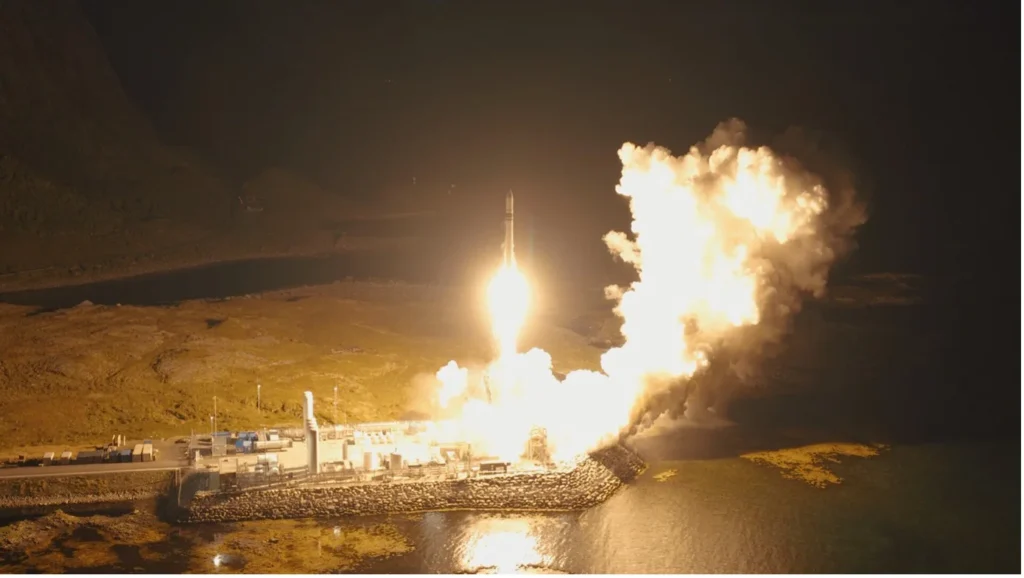
The photograph captures Isar Aerospace’s Spectrum rocket lifting off from Andøya Spaceport in Norway on 5 September 2026, illuminating the surrounding coastline. The German company’s two-stage launcher reached orbit on its second flight, carrying commercial and educational payloads under the “Onward and Upward” mission. Supported by ESA’s Boost! programme, the flight also fulfilled the first orbital-launch milestone of the European Launcher Challenge. It marked a substantial advance from Spectrum’s brief inaugural test in March 2025.
For European security, the potential value lies in diversifying access to orbit. A broader European launch sector could give governments more options for deploying and replenishing satellites supporting communications, observation and security, strengthening resilience when other launch services are unavailable. However, one successful qualification flight does not establish a dependable launch service. Spectrum’s strategic contribution will depend on repeatable performance, production capacity, competitive costs and launch frequency. The photograph therefore captures an important technical achievement whose wider security benefits will emerge through sustained operations. Europe’s ability to place satellites in orbit when needed remains the practical test of greater autonomy.
From Cars to Defence: Germany’s Industrial Conversion Test
Volkswagen’s proposed conversion of its Osnabrück plant illustrates the growing intersection between automotive restructuring and European rearmament. Under a preliminary agreement announced on 7 September, Israeli investor Aurelius Capital and Lower Saxony would acquire the site, where vehicle production is scheduled to end in 2027. Cooperation with Rafael would support air-defence manufacturing, while labour representatives estimate that approximately 1,400 of the plant’s 1,800 jobs could be preserved. The infographic therefore presents a potential industrial transition whose production and employment outcomes remain conditional. Reuters
Chinese competition forms part of a wider adjustment involving weak demand, production costs and Volkswagen’s transition towards electric vehicles. Reuters reporting Rising defence demand could help retain skilled workers and manufacturing infrastructure, but conversion requires investment, retraining, qualified suppliers and sustained orders. Cooperation with an established defence manufacturer may accelerate this process, while making technology access and control important considerations. Osnabrück’s significance for European security will ultimately depend on whether industrial restructuring produces reliable deliveries, maintainable equipment and resilient supply chains. Preserving employment would be a valuable outcome; greater defence capacity requires those retained skills and facilities to become operationally useful.
🇪🇺🇨🇳🚙🪖 From Cars to Air Defense: The Real Cost of Europe’s Competition with China
The European automotive industry is undergoing a historic, structural realignment. Faced with weak European demand, high manufacturing costs, and fierce competition from lower-cost Chinese rivals, Volkswagen is officially pivoting its Osnabrueck factory away from traditional car production.
Instead of building passenger cars, the facility is switching to defense production.
Under a preliminary deal with Israel's Aurelius Capital and the German state of Lower Saxony, vehicle production at the site will end by 2027. In its place, the factory’s new "anchor project" will focus on manufacturing air and missile defense systems and components in cooperation with Israel's Rafael Advanced Defense Systems. There are also discussions to convert VW Amarok pickup trucks into military vehicles.
While this transaction is expected to preserve about 1,400 of the plant's 1,800 jobs, the broader economic and geopolitical implications are profound:
The Chinese Competitive Threat: European auto manufacturing is struggling to defend its market share and maintain margins against cheaper Chinese rivals.
The Geopolitical Offset: As car sales stagnate, rising defense spending in Europe is stepping in to absorb excess automotive manufacturing capacity.
A Growing Industry Trend: This is not an isolated event. VW has warned that up to four German plants could face closure or repurposing, and other major industrial players like Rheinmetall and Continental are already pursuing similar defense-manufacturing initiatives.
This is a stark reminder of how global trade pressures and shifting geopolitical priorities are fundamentally rewriting Europe's industrial map.#Volkswagen #AutomotiveIndustry #DefenseIndustry #GlobalTrade #Manufacturing #ChinaCompetition #Germany #Geopolitics #EconomicShift
— Beyond the Horizon (@BehorizonOrg) September 8, 2026
Volkswagen’s Defence Pivot: The Strategic Cost of Europe’s China Gap
Volkswagen’s proposed sale of its Osnabrück plant exposes the connection between Europe’s industrial competitiveness and its security ambitions. Under the preliminary agreement announced on 7 September, Israel’s Aurelius Capital and Lower Saxony would acquire the site, with Rafael cooperation envisaged for air-defence production after vehicle manufacturing ends in 2027. Labour representatives estimate that around 1,400 of 1,800 jobs could be preserved. The immediate opportunity is valuable. The broader question is whether rearmament can compensate for weaknesses in the civilian industries that sustain European prosperity. Reuters
Europe’s failure must be defined precisely. EU electric-car production increased by 30% to nearly 3.2 million vehicles in 2025, and the bloc remained a net exporter. Yet China produced almost three-quarters of the world’s electric cars. Europe retains substantial industrial strength, but has struggled to match China’s manufacturing scale and cost competitiveness. Osnabrück illustrates the pressure on particular plants within that wider adjustment; Chinese competition alone cannot explain its future. IEA
The disadvantage extends beyond cheaper labour. The International Energy Agency identifies manufacturing scale, efficient automation, integrated battery supply chains and accumulated production experience as major Chinese strengths. Subsidies and preferential financing helped establish those advantages. IEA The European Commission’s 2024 investigation also found unfair subsidisation threatening EU producers. European Commission However, correcting subsidies cannot eliminate efficiencies built through years of manufacturing. Tariffs can address distortions while leaving European firms’ underlying productivity problems unresolved.
Volkswagen’s response illustrates the technological dimension. In January, it announced production using an electronic architecture developed by its Chinese subsidiaries with XPENG, reporting an 18-month journey from concept to production. Volkswagen This demonstrates the value of combining European expertise with China’s industrial environment. It also suggests that a European company can strengthen its competitiveness through capabilities developed outside Europe. Corporate recovery therefore does not automatically restore employment, innovation or supplier networks at home.
That distinction matters for security. If more industrial activity and expertise accumulate abroad, Europe risks weakening the supplier networks, technical workforce and tax revenues needed to sustain rearmament. Dependence can also deepen even where final assembly remains European, if essential components or technologies are difficult to replace. The strategic consequence would be a widening gap between governments’ military commitments and the economic capacity supporting them. Defence production can support sophisticated manufacturing, but makes revenues more dependent on fiscal decisions. It cannot be assumed to replace the export earnings and wider commercial demand lost through declining civilian competitiveness.
Defence conversion can preserve skills and productive infrastructure. Osnabrück’s experience in small-series production and specialised vehicles may suit demanding defence projects, as Volkswagen’s announcement suggests. Volkswagen Nevertheless, this makes the site a particular opportunity rather than proof that defence orders can absorb automotive restructuring across Europe. Conversion requires investment, retraining, qualification and dependable contracts. Procurement decisions should follow military requirements and delivery performance; allowing employment preservation to dominate would risk expensive equipment and persistent capability gaps.
The Rafael partnership could accelerate access to established technology. Its contribution to European autonomy would depend on arrangements for production, maintenance, upgrades and supply during crises. A factory’s location cannot establish those conditions by itself. European customers should therefore seek durable technical access and support arrangements alongside local manufacturing. The objective should be greater freedom to operate and sustain equipment.
The policy response must address both industrial renewal and defence delivery. Europe needs predictable investment conditions, stronger battery and component industries, faster commercialisation and vehicles consumers can afford. Selective international partnerships can help, provided they develop capabilities within Europe. Defence programmes, meanwhile, should aggregate demand, reward reliable suppliers and fund retraining where civilian expertise fits operational requirements. Public support should be judged by improvements in productivity and usable capability alongside employment outcomes.
Osnabrück could become a successful example of industrial adaptation. It would be a strategic mistake, however, to treat its conversion as evidence that Europe has resolved its competition problem with China. Rearmament can preserve parts of the industrial base. Sustaining European power requires rebuilding the civilian competitiveness that finances it.